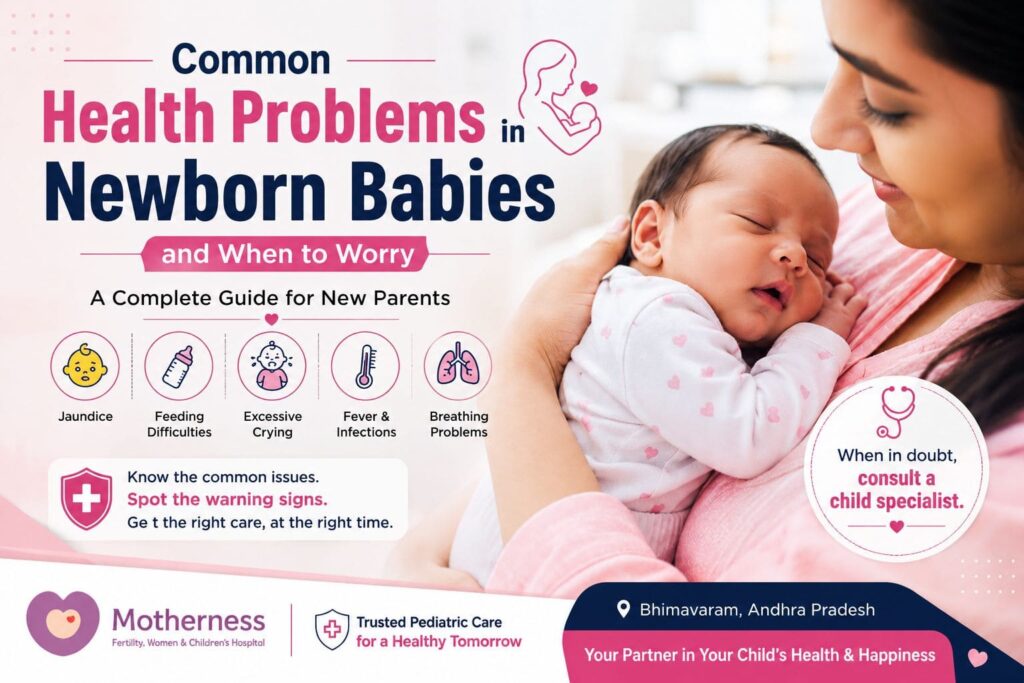
A Complete Guide for New Parents | Target Keyword: Best Child Specialist in Bhimavaram
Bringing a newborn baby home is one of life’s happiest moments. Along with the joy, it is completely natural for new parents to feel anxious about every little change in their baby’s health. Is frequent crying normal? Why does the baby’s skin look yellow? Should you worry if your newborn isn’t feeding well?
The first few weeks of life are filled with rapid changes as babies adjust to the outside world. While many newborn health concerns are completely normal and temporary, some symptoms require immediate medical attention. Understanding the difference between common newborn conditions and warning signs can help parents make informed decisions without unnecessary panic.
If you’re looking for the Best Child Specialist in Bhimavaram, knowing when to seek expert medical care is just as important as understanding what’s normal during the newborn stage.
In this guide, we’ll discuss the most common health problems seen in newborn babies, how to manage them at home, warning signs you should never ignore, and when it’s time to consult a pediatric specialist.
Understanding Newborn Health
A newborn refers to a baby from birth to 28 days of age. During this period, the baby’s body undergoes remarkable changes as it adapts to life outside the womb.
Newborns may experience several minor health issues that usually resolve naturally with proper care. However, because babies have delicate immune systems and cannot communicate their discomfort, parents should remain observant and consult a pediatrician whenever something seems unusual.
1. Newborn Jaundice
One of the most common conditions affecting newborns is jaundice.
It causes:
- Yellowing of the skin
- Yellow eyes
- Sleepiness
- Mild feeding difficulties
Jaundice occurs because a baby’s liver is still developing and may not efficiently remove bilirubin from the blood.
When it’s normal
Physiological jaundice usually appears:
- Between Day 2 and Day 4
- Peaks around Day 4 or 5
- Gradually disappears within two weeks
When to worry
Seek immediate medical care if:
- Yellowing appears within the first 24 hours
- Baby becomes difficult to wake
- Baby refuses feeds
- Yellow color spreads rapidly
- High fever develops
Prompt evaluation helps prevent complications.
2. Poor Feeding
Newborns usually feed every 2–3 hours.
Some temporary feeding difficulties are expected while both mother and baby learn breastfeeding.
Common reasons include:
- Improper latch
- Sleepiness
- Mild tongue tie
- Nasal congestion
Warning signs
Consult a pediatrician if your baby:
- Misses multiple feeds
- Shows weak sucking
- Vomits after every feed
- Produces fewer than six wet diapers after Day 5
- Is losing excessive weight
Poor feeding may indicate dehydration or an underlying illness.
3. Excessive Crying
Crying is how newborns communicate.
Common reasons include:
- Hunger
- Wet diapers
- Gas
- Need for sleep
- Temperature discomfort
- Wanting to be held
Most babies cry between two and three hours per day.
When crying needs medical attention
See a child specialist if crying is:
- High-pitched
- Continuous for several hours
- Accompanied by fever
- Associated with vomiting
- Paired with poor feeding
- Associated with difficulty breathing
Persistent inconsolable crying may indicate infection, reflux, or another medical condition.
4. Colic
Colic usually begins around two to three weeks of age.
Typical symptoms:
- Crying every evening
- Pulling legs toward the abdomen
- Passing gas
- Difficulty calming
Although frustrating, colic usually resolves by three to four months.
Parents can help by:
- Burping after feeds
- Holding baby upright
- Gentle rocking
- White noise
- Skin-to-skin contact
5. Baby Acne
Small red or white bumps on a newborn’s face are very common.
Baby acne develops because of maternal hormones.
Do
- Wash gently with water
- Keep skin clean
- Avoid oily creams
Don’t
- Squeeze pimples
- Use acne medications
- Apply home remedies
Baby acne generally clears within a few weeks.
6. Diaper Rash
Because newborn skin is extremely sensitive, diaper rash is common.
Causes include:
- Moisture
- Frequent stools
- Friction
- Sensitive skin
Prevention tips
- Change diapers frequently
- Keep skin dry
- Use barrier creams
- Allow diaper-free time
When to worry
Consult a doctor if:
- Rash worsens
- Blisters develop
- Fever occurs
- Rash lasts more than three days
7. Umbilical Cord Problems
The umbilical cord stump usually falls off within one to two weeks.
Normal care includes:
- Keeping it dry
- Avoiding unnecessary touching
- Cleaning only if instructed
Warning signs
Seek medical care if you notice:
- Bad smell
- Pus
- Swelling
- Redness spreading around the cord
- Fever
These could indicate infection.
8. Constipation and Stool Changes
Many parents worry about bowel movements.
Breastfed babies may poop several times daily or only once every few days.
Both patterns can be normal.
Formula-fed babies generally pass stools less frequently.
Seek medical advice if
- Baby passes hard pellet-like stools
- Blood appears in stool
- Abdomen becomes swollen
- Baby refuses feeds
- Persistent vomiting occurs
9. Vomiting vs Spitting Up
Small amounts of milk coming back after feeds are normal.
This is called spitting up.
It happens because the valve between the stomach and food pipe is still immature.
Reduce spitting up by
- Burping after feeds
- Avoiding overfeeding
- Keeping baby upright for 20–30 minutes
Warning signs
Immediate evaluation is needed if:
- Vomiting is forceful
- Green vomit appears
- Blood is present
- Baby becomes dehydrated
- Baby stops feeding
10. Fever in Newborns
A fever in a newborn should never be ignored.
A temperature above 100.4°F (38°C) requires immediate medical evaluation.
Unlike older children, newborns can become seriously ill very quickly.
Never give fever medicine without consulting a pediatrician.
11. Breathing Problems
Newborn breathing patterns can appear irregular.
Occasional pauses of a few seconds may be normal.
However, seek emergency care if you notice:
- Fast breathing
- Blue lips
- Chest pulling inward
- Grunting
- Persistent noisy breathing
Breathing problems always deserve urgent medical attention.
12. Skin Rashes
Newborns commonly develop harmless rashes.
Examples include:
- Heat rash
- Milia
- Newborn rash (Erythema toxicum)
These often disappear naturally.
Medical evaluation is needed if rashes are:
- Accompanied by fever
- Filled with pus
- Rapidly spreading
- Painful
- Associated with blisters
13. Sleep Concerns
Newborns sleep between 14 and 17 hours daily.
Parents often worry when babies seem to sleep “too much.”
Usually, frequent sleeping is normal if the baby:
- Feeds well
- Wakes for feeds
- Gains weight
- Produces normal wet diapers
Seek medical advice if your baby becomes unusually difficult to wake or refuses feeds.
Red Flags Every Parent Should Know
Contact your pediatrician immediately if your newborn has:
- Fever above 100.4°F (38°C)
- Difficulty breathing
- Blue lips
- Poor feeding
- Excessive sleepiness
- Persistent vomiting
- Seizures
- Yellow skin within 24 hours after birth
- Continuous crying
- Fewer wet diapers
- Severe diarrhea
- Blood in stool
- Umbilical cord infection
Early treatment often prevents serious complications.
Tips to Keep Your Newborn Healthy
Parents can support their baby’s health through simple daily habits.
Feed Frequently
Breast milk provides ideal nutrition and antibodies that strengthen your baby’s immune system.
Practice Good Hygiene
Wash hands before handling your baby to reduce infection risk.
Follow Vaccination Schedule
Vaccines protect newborns from several life-threatening diseases.
Ensure Safe Sleep
Always place your baby on their back on a firm mattress without pillows, blankets, or soft toys.
Attend Regular Pediatric Check-ups
Routine visits help monitor growth, feeding, development, and vaccination progress.
When Should You Consult the Best Child Specialist in Bhimavaram?
While many newborn concerns improve naturally, some situations require expert evaluation. Parents should not wait if they notice persistent symptoms or if something simply doesn’t feel right.
Consider consulting the Best Child Specialist in Bhimavaram if your newborn:
- Has difficulty feeding
- Is not gaining weight
- Develops fever
- Has prolonged jaundice
- Shows breathing difficulties
- Cries continuously without an obvious cause
- Experiences repeated vomiting
- Has frequent infections
- Appears unusually sleepy or inactive
- Misses developmental milestones during follow-up visits
An experienced pediatrician can perform a thorough examination, identify underlying causes early, and guide parents on appropriate treatment and newborn care.
For families in Bhimavaram and surrounding areas, choosing a trusted pediatric care center ensures access to timely consultations, newborn assessments, growth monitoring, immunizations, and expert support whenever concerns arise.
Why Parents Trust Motherness Hospital
The first few weeks after birth are critical for a baby’s health and development. Having access to experienced pediatric care provides reassurance and timely medical support whenever needed.
At Motherness Hospital, parents receive comprehensive newborn and child healthcare services in a compassionate and family-friendly environment. The hospital focuses on preventive care, early diagnosis, vaccination guidance, growth monitoring, nutritional counseling, and management of common childhood illnesses.
Whether it’s your baby’s first health check-up or a concern that needs expert attention, the experienced pediatric team is committed to providing personalized care tailored to every child’s needs.
If you’re searching for the Best Child Specialist in Bhimavaram, Motherness Hospital offers trusted pediatric services designed to support your child’s healthy growth from the very beginning.
Frequently Asked Questions (FAQs)
1. How often should a newborn feed?
Most newborns feed every 2–3 hours, including during the night. Feeding frequency may vary depending on whether the baby is breastfed or formula-fed.
2. Is newborn jaundice always dangerous?
No. Mild physiological jaundice is common and often resolves naturally. However, jaundice appearing within the first 24 hours or becoming severe requires immediate medical evaluation.
3. When should I worry about my baby’s crying?
If your baby cries continuously for several hours, has a fever, refuses feeds, vomits repeatedly, or seems unusually irritable, consult a pediatrician promptly.
4. What temperature is considered a fever in a newborn?
A rectal temperature of 100.4°F (38°C) or higher is considered a fever and requires immediate medical assessment.
5. How can I protect my newborn from infections?
Practice good hand hygiene, ensure exclusive breastfeeding when possible, avoid exposing your baby to sick individuals, keep vaccinations up to date, and attend regular pediatric check-ups.
Final Thoughts
Every newborn experiences small adjustments during the first few weeks of life, and many health concerns are completely normal. However, parents should never ignore persistent symptoms, feeding difficulties, breathing problems, or fever.
The key is to stay informed, observe your baby’s behavior, and seek medical advice whenever you’re uncertain. Early diagnosis and timely treatment not only provide peace of mind but also help ensure the best possible start for your child’s lifelong health.
If you’re looking for the Best Child Specialist in Bhimavaram, choosing an experienced pediatric team can make all the difference in your baby’s early development and overall well-being. Regular check-ups, timely vaccinations, and expert guidance are essential steps toward raising a healthy, happy child.