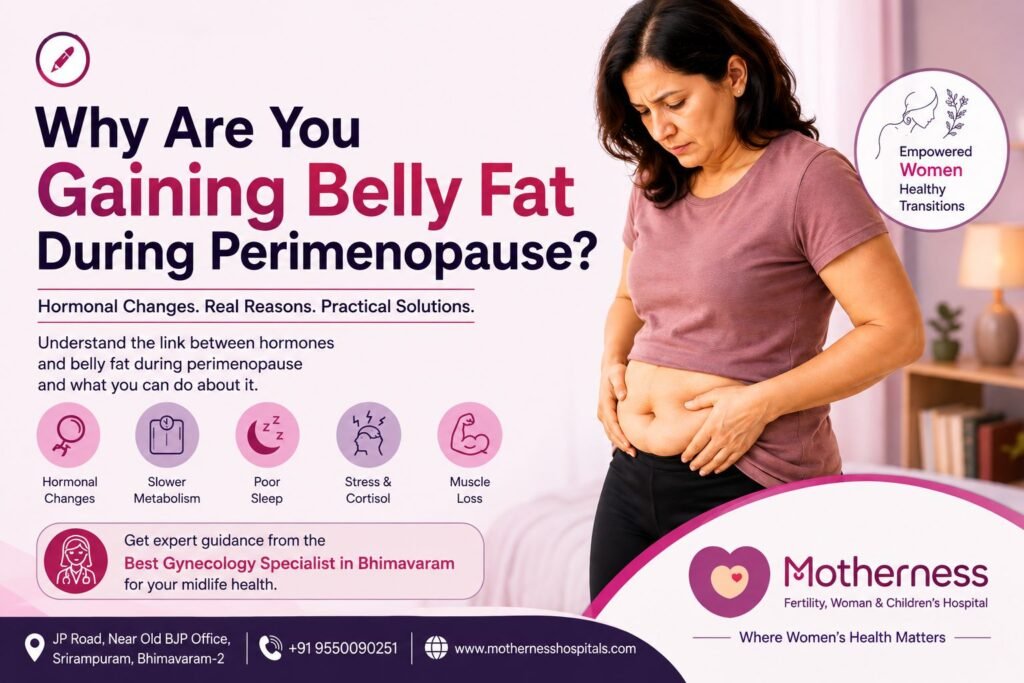
Many women in their 40s and early 50s notice a frustrating change: their waistline seems to be getting larger even though their diet and daily routine have not changed dramatically.
If you are experiencing belly fat during perimenopause, you are not alone—and it is not necessarily because you are eating too much or exercising too little. The hormonal and metabolic changes that occur during the menopause transition can influence where your body stores fat, how much muscle you maintain, your appetite, sleep, and overall energy balance.
The good news is that understanding why these changes happen can help you take practical steps to manage them.
If you live in Bhimavaram, Palakollu, Tadepalligudem, Tanuku, or nearby areas and are experiencing weight gain along with irregular periods, hot flashes, sleep problems, or other hormonal symptoms, discussing your concerns with a qualified gynecologist can help identify the right approach for you.
What Is Perimenopause?
Perimenopause is the transition leading up to menopause. During this stage, ovarian hormone production becomes more variable and eventually declines. Periods may become irregular, and symptoms such as hot flashes, night sweats, sleep disturbances, mood changes, and changes in body composition can occur.
The transition commonly begins during the 40s, although the timing varies from woman to woman. Menopause itself is confirmed after 12 consecutive months without a menstrual period.
One of the changes women may notice is a larger waistline or increased abdominal fat.
Why Does Belly Fat Increase During Perimenopause?
There isn’t one single cause. Several changes can occur at the same time.
1. Changes in Estrogen Can Affect Fat Distribution
Estrogen levels fluctuate considerably during perimenopause and eventually decline.
These hormonal changes are associated with changes in body-fat distribution. Instead of storing proportionally more fat around the hips and thighs, women may notice more fat accumulating around the abdomen.
The National Institute on Aging notes that during the menopausal transition, women may experience changes in how their bodies use energy and in the distribution of body fat.
This means that the same eating and exercise habits that worked in your 30s may not produce exactly the same results in your 40s or 50s.
2. Muscle Mass May Decline With Age
Another important factor is the gradual loss of muscle mass that can occur with aging.
Muscle tissue plays an important role in energy expenditure. If muscle mass decreases while daily activity remains the same—or decreases slightly—your overall energy needs can change.
This is one reason why simply eating less may not be the best long-term strategy for managing midlife weight gain.
Strength training, adequate protein intake, regular physical activity, and an overall balanced diet can help support muscle health.
3. Poor Sleep Can Make Weight Management More Difficult
Sleep problems are common during the menopause transition. Hot flashes, night sweats, stress, anxiety, and hormonal changes can all interfere with sleep.
When you are consistently tired, maintaining regular exercise and healthy eating habits can become harder.
Poor sleep may also affect appetite, food choices, energy levels, and your ability to stay physically active throughout the day.
So if your belly fat is increasing and you are also waking frequently at night, don’t treat these as completely separate problems.
4. Stress and Cortisol May Play a Role
Midlife can be a particularly demanding stage of life. Many women are balancing work, children, family responsibilities, relationships, and caring for older family members.
Chronic stress can influence sleep, eating patterns, physical activity, and overall health. Stress-related changes may therefore contribute indirectly to weight gain.
However, it is important not to assume that cortisol alone is responsible for every case of abdominal weight gain. Your overall lifestyle, age, hormones, sleep, muscle mass, and medical factors all matter.
5. Your Activity Level May Change Without You Realising It
You may still be “active” but moving less than you did 10 or 15 years ago.
For example:
- Less walking during the day
- More sitting at work
- Fewer strength-training sessions
- Less recreational activity
- More fatigue
- Reduced exercise because of joint or muscle discomfort
These small changes can accumulate over time.
The answer is not necessarily extreme exercise. Consistent movement, walking, resistance training, and activities that you enjoy can be more sustainable.
6. Other Health Conditions Can Also Contribute
Not every change in weight or abdominal size should automatically be blamed on perimenopause.
Conditions such as thyroid disorders, insulin resistance, certain medications, sleep problems, and other health issues may also influence weight.
This is one reason a medical evaluation can be useful when weight gain is sudden, significant, or accompanied by other symptoms.
Is Belly Fat During Perimenopause Normal?
Some change in body composition and fat distribution can occur during perimenopause and menopause. However, “common” does not mean that every symptom should be ignored.
If your waistline is changing gradually along with other typical perimenopausal symptoms, it may be part of the menopause transition.
But you should consider speaking with a healthcare professional if you have:
- Rapid or unexplained weight gain
- Significant fatigue
- Persistent sleep problems
- Severe mood changes
- Very irregular or unusually heavy periods
- Bleeding between periods
- Bleeding after menopause
- New or worsening pelvic pain
- Symptoms that are interfering with daily life
A gynecologist can help determine whether your symptoms are consistent with perimenopause or whether another condition should be investigated.
What Can You Do About Perimenopause Belly Fat?
The goal should not be to “fight” your hormones. Instead, focus on protecting your metabolic health, muscle mass, sleep, and overall well-being.
1. Prioritise Strength Training
Resistance exercises can help maintain and build muscle.
Depending on your fitness level and health status, this might include:
- Squats
- Lunges
- Resistance-band exercises
- Bodyweight exercises
- Weight training
- Functional strength exercises
If you have not exercised regularly, start gradually and consider professional guidance.
2. Stay Physically Active Throughout the Day
Exercise is important, but everyday movement matters too.
Walking, taking the stairs, household activities, gardening, and reducing prolonged sitting can help you stay active.
A realistic routine that you can maintain consistently is generally more useful than an intense plan that lasts only a few weeks.
3. Build Balanced Meals
Instead of focusing only on calories, pay attention to overall nutritional quality.
A balanced meal can include:
- Protein-rich foods
- Vegetables
- Fruits
- Whole grains or other high-fibre carbohydrates
- Healthy fats
- Adequate fluids
Highly processed foods and excess added sugars can make it harder to maintain a healthy eating pattern when consumed frequently.
There is no single “menopause diet” that works for every woman. Your nutritional needs should be considered alongside your health, activity level, preferences, and medical history.
4. Don’t Ignore Sleep
If hot flashes or night sweats are repeatedly waking you up, discuss them with your healthcare professional rather than simply accepting poor sleep as unavoidable.
Good sleep habits include maintaining a consistent bedtime, keeping the bedroom comfortable, exercising regularly but not immediately before bed, and avoiding large meals close to bedtime.
If sleep remains a significant problem, medical evaluation may be appropriate.
5. Manage Stress in a Practical Way
You do not need to eliminate every source of stress.
Instead, find realistic ways to manage it:
- Regular walking
- Breathing exercises
- Yoga or stretching
- Relaxation practices
- Social connection
- Hobbies
- Adequate sleep
- Professional support when needed
Small, consistent habits can be more sustainable than trying to completely change your lifestyle overnight.
Do You Need Hormone Testing for Belly Fat?
Not necessarily.
Perimenopause is a clinical transition, and hormone levels can fluctuate significantly during this period. A doctor will consider your age, menstrual pattern, symptoms, medical history, and examination rather than relying on one hormone test alone.
Depending on your symptoms and medical history, your doctor may also consider whether other health concerns—such as thyroid problems or metabolic issues—need evaluation.
This is why a personalised consultation is more useful than ordering a long list of hormone tests on your own.
Can Hormone Therapy Help With Perimenopause?
Hormone therapy may be appropriate for some women with bothersome menopause symptoms, but it is not a general weight-loss treatment.
The Menopause Society states that hormone therapy is primarily used to manage symptoms such as bothersome hot flashes and night sweats, and treatment decisions should consider an individual’s symptoms, age, health history, and potential risks and benefits.
Importantly, hormone therapy is not suitable for everyone. A qualified healthcare professional should assess whether it is appropriate for you.
If you are considering hormone therapy because of multiple perimenopause symptoms, speak with a gynecologist rather than starting any hormonal medication without medical advice.
When Should You See a Gynecologist for Perimenopause?
You don’t have to wait until symptoms become severe.
Consider consulting a gynecologist if you are experiencing several changes at once, such as:
Irregular periods + belly fat + hot flashes + poor sleep + mood changes
A gynecologist can look at the complete picture rather than treating each symptom separately.
This can be particularly valuable for women who also have concerns about PCOS, thyroid health, heavy periods, abnormal bleeding, contraception, bone health, sexual health, or other midlife women’s health issues.
Regular healthcare visits can also help women make informed decisions about symptom management during the menopause transition.
Looking for a Gynecology Specialist in Bhimavaram?
If you are searching for the Best gynecology specialist in Bhimavaram, choose a healthcare provider who understands that women’s health does not stop with pregnancy and fertility care.
Midlife women’s health may involve menstrual changes, perimenopause symptoms, hormonal concerns, weight and metabolic changes, sleep problems, and preventive gynecological care.
At Motherness Fertility, Woman & Children’s Hospital, women from Bhimavaram and surrounding areas can seek professional guidance for their women’s health concerns.
Visit Motherness Fertility, Woman & Children’s Hospital
The hospital is located on JP Road, Near Old BJP Office, Srirampuram, Bhimavaram-2. For appointments or enquiries, you can contact the hospital at +91 9550090251.
Whether you are from Bhimavaram, Palakollu, Tadepalligudem, Tanuku, or a nearby town in West Godavari, getting the right medical guidance can help you understand what is happening to your body and choose appropriate next steps.
Frequently Asked Questions
1. Why am I gaining belly fat even though I haven’t changed my diet?
Perimenopause can involve changes in hormone levels, body-fat distribution, muscle mass, sleep, activity levels, and energy use. These factors can contribute to changes in waist size even when your diet appears unchanged.
2. Does estrogen loss cause belly fat?
Changes in estrogen during the menopause transition are associated with changes in body-fat distribution. However, abdominal weight gain usually has multiple contributing factors rather than one single hormonal cause.
3. Can walking reduce belly fat during perimenopause?
Regular walking is an excellent way to increase daily physical activity. For overall body-composition and metabolic health, combining aerobic activity with resistance training and a balanced diet can be beneficial.
4. Should I stop eating carbohydrates during perimenopause?
There is generally no need to completely eliminate carbohydrates. Instead, focus on balanced meals, appropriate portions, fibre-rich foods, and minimally processed carbohydrate sources.
5. Is hormone therapy a treatment for belly fat?
Hormone therapy is primarily used for appropriate menopause-related symptoms such as bothersome hot flashes and night sweats. It should not be considered a standalone weight-loss treatment.
6. When should I see a gynecologist?
If weight gain is sudden or unexplained, or if it occurs alongside irregular/heavy bleeding, hot flashes, sleep problems, mood changes, pelvic symptoms, or other concerns, a gynecological consultation can help determine the appropriate evaluation and management.
Final Takeaway
Perimenopause belly fat is not simply a matter of willpower.
Hormonal fluctuations, changing body-fat distribution, muscle loss, sleep disruption, stress, aging, and changes in physical activity can all contribute to changes in your waistline.
Instead of trying increasingly restrictive diets or blaming yourself, focus on understanding the underlying changes and getting personalised guidance when necessary.
If you are in Bhimavaram or nearby areas of West Godavari and are looking for the Best gynecology specialist in Bhimavaram for perimenopause, hormonal concerns, or broader midlife women’s health, consider speaking with the women’s health team at Motherness Fertility, Woman & Children’s Hospital.
Your body is changing—but you don’t have to navigate those changes alone.
Book a Consultation
For personalised guidance regarding perimenopause symptoms, menstrual changes, hormonal concerns, or midlife women’s health, contact Motherness Fertility, Woman & Children’s Hospital, Bhimavaram.
Call: +91 9550090251
Location: JP Road, Near Old BJP Office, Srirampuram, Bhimavaram-2