Periods are a normal part of a woman’s reproductive life, but very heavy or prolonged menstrual bleeding is not something you should always consider “normal.” Many women simply adjust their routines around heavy periods—changing pads frequently, avoiding social activities, feeling exhausted, or dealing with painful cramps—without realizing that these symptoms may need medical evaluation.
Heavy menstrual bleeding, medically known as menorrhagia, can sometimes be related to hormonal changes, fibroids, polyps, adenomyosis, PCOS, thyroid problems, certain medications, or other underlying conditions. In some women, persistent heavy bleeding can also lead to iron-deficiency anemia.
So, how can you tell the difference between a period that is simply heavy and one that needs medical attention?
If you are experiencing unusually heavy periods, consulting an experienced Best Gynecologist in West Godavari can help identify the underlying cause and guide you toward appropriate treatment.
What Is Considered a Heavy Period?
Every woman’s menstrual flow is different, so there is no single amount of bleeding that is considered “normal” for everyone.
However, your periods may be considered unusually heavy if:
- You need to change your sanitary pad or tampon every hour for several hours.
- You need to use two forms of menstrual protection at the same time.
- Your periods regularly last more than 7 days.
- You frequently wake up at night to change your sanitary protection.
- You pass unusually large blood clots.
- Heavy bleeding makes you miss work, school, exercise, social activities, or other daily activities.
- You feel unusually tired, weak, dizzy, or short of breath during or after your periods.
These symptoms can indicate heavy menstrual bleeding and should not simply be dismissed as “having a heavy flow.”
Is Heavy Bleeding Ever Normal?
Some variation in menstrual flow is completely normal.
For example, you may experience a heavier flow during the first few days of your period and lighter bleeding afterward. Your menstrual pattern can also change during different stages of life.
Teenagers may have irregular or heavier periods during the early years after their first period because ovulation may not occur regularly. Similarly, women approaching menopause may experience changes in their menstrual cycle due to hormonal fluctuations.
However, a change that is persistent, severe, or interferes with your everyday life deserves attention.
The important question is not only “How much blood am I losing?” but also:
Is my period affecting my health or quality of life?
If the answer is yes, it is worth discussing your symptoms with a gynecologist.
7 Warning Signs That Your Period May Be Too Heavy
1. You Are Changing Your Pad Every Hour
If you are repeatedly soaking through a pad or tampon every hour for several hours, your bleeding is heavier than expected.
If you are soaking through at least one pad or tampon an hour for more than two hours, medical attention should be sought promptly.
2. Your Period Lasts More Than 7 Days
A period that consistently continues beyond a week can be a sign of heavy or abnormal menstrual bleeding.
Occasionally having a longer cycle may not indicate a serious problem, but repeated prolonged bleeding should be evaluated.
3. You Pass Large Blood Clots
Small clots can sometimes occur during menstruation, particularly when the flow is heavy.
However, repeatedly passing large clots, especially when accompanied by prolonged or very heavy bleeding, is a reason to speak with a gynecologist.
4. You Feel Extremely Tired During Your Period
Heavy menstrual bleeding can gradually reduce the body’s iron stores.
Over time, this may contribute to iron-deficiency anemia, which can cause symptoms such as:
- Persistent tiredness
- Weakness
- Headaches
- Dizziness
- Shortness of breath
- Reduced concentration
Heavy menstrual bleeding is a recognized cause of iron-deficiency anemia.
5. You Wake Up at Night to Change Your Pad
If your menstrual flow regularly wakes you from sleep because you need to change your sanitary protection, it may be a sign that your bleeding is heavier than usual.
6. Your Periods Affect Your Daily Life
Your menstrual cycle should not consistently prevent you from:
- Going to work
- Attending college or school
- Exercising
- Travelling
- Sleeping comfortably
- Spending time with family or friends
If heavy bleeding repeatedly forces you to change your lifestyle, consider talking to a gynecologist.
7. You Have Bleeding Between Periods
Bleeding or spotting between periods is different from your usual menstrual flow. Repeated unexpected bleeding should be evaluated, particularly if it is accompanied by pelvic pain or unusually heavy periods.
What Causes Heavy Periods?
Heavy periods can have several possible causes. Identifying the cause is important because treatment depends on the underlying problem.
Hormonal Imbalance
Estrogen and progesterone help regulate the growth and shedding of the uterine lining.
When hormonal balance is disrupted, the uterine lining may become thicker and result in heavier or irregular bleeding.
Hormonal changes can be associated with conditions such as PCOS, thyroid disorders, or cycles in which ovulation does not occur regularly.
Uterine Fibroids
Fibroids are non-cancerous growths that develop in or around the uterus.
Depending on their size and location, fibroids may cause:
- Heavy periods
- Prolonged periods
- Pelvic pressure
- Pelvic pain
- Frequent urination
Fibroids are a common cause of heavy menstrual bleeding in women of reproductive age.
Uterine Polyps
Polyps are growths that develop from the lining of the uterus.
They may cause heavy periods, irregular bleeding, spotting between periods, or unpredictable menstrual cycles.
Adenomyosis
Adenomyosis occurs when tissue similar to the uterine lining grows into the muscular wall of the uterus.
It can cause:
- Heavy menstrual bleeding
- Painful periods
- Pelvic discomfort
PCOS and Ovulation Problems
Women with PCOS or irregular ovulation may experience unpredictable periods.
When periods are delayed, the uterine lining can sometimes build up and subsequently result in heavier bleeding.
Thyroid and Other Medical Conditions
Thyroid disorders and certain liver, kidney, or blood-clotting conditions can contribute to abnormal or heavy menstrual bleeding. Some medications, including certain blood-thinning medicines, can also affect menstrual bleeding.
Pregnancy-Related Causes
If pregnancy is possible and you experience unusual or heavy bleeding, do not automatically assume it is a normal period.
Bleeding during pregnancy can have different causes and requires appropriate medical assessment.
When Should You See a Gynecologist?
You should consider booking a gynecology consultation if:
- Your periods regularly last longer than 7 days.
- You repeatedly soak through pads very quickly.
- You pass large or frequent clots.
- Your periods are becoming significantly heavier than before.
- You experience bleeding between periods.
- You have severe menstrual or pelvic pain.
- You feel weak, dizzy, extremely tired, or short of breath.
- Heavy periods interfere with work, studies, exercise, travel, or sleep.
- You have recently entered your late reproductive years and your bleeding pattern has changed significantly.
- You have heavy bleeding along with a known history of fibroids, PCOS, thyroid problems, or a bleeding disorder.
A gynecologist can assess whether the bleeding is related to hormonal changes or an underlying condition that needs treatment.
When Is Heavy Bleeding an Emergency?
Very heavy bleeding should not be ignored.
If you are soaking through at least one pad or tampon every hour for more than two hours, especially if you also feel faint, extremely weak, dizzy, short of breath, or otherwise unwell, seek urgent medical attention.
Also seek prompt medical evaluation for unusual bleeding during pregnancy or bleeding after menopause.
What Can a Gynecologist Do for Heavy Periods?
The first step is understanding why the bleeding is happening.
During your consultation, your gynecologist may ask about:
- Your menstrual cycle pattern
- How many days you bleed
- How frequently you change pads
- Presence and size of clots
- Pain and other symptoms
- Pregnancy history
- Current medications
- Medical and family history
Depending on your symptoms, your doctor may recommend investigations such as blood tests to assess anemia or iron deficiency, thyroid-related testing, pelvic ultrasound, or other investigations when appropriate.
Treatment depends on the cause, severity of bleeding, overall health, and whether you are planning pregnancy.
Depending on the diagnosis, treatment may include medicines, hormonal therapies, treatment for anemia, or procedures to address conditions such as fibroids or polyps. Your gynecologist can recommend the most appropriate option after evaluation.
Can Heavy Periods Affect Fertility?
Heavy periods do not automatically mean that a woman will have fertility problems.
However, some conditions that cause heavy bleeding—such as fibroids, adenomyosis, endometriosis, PCOS, or other reproductive health conditions—may also affect fertility in some women.
That is why identifying the underlying cause can be important, particularly if you are planning pregnancy.
If you are experiencing heavy periods while trying to conceive, discussing both your menstrual health and fertility goals with a gynecologist can help ensure that treatment is appropriate for your reproductive plans.
What Should You Track Before Your Gynecology Appointment?
Keeping a simple menstrual diary can make your consultation more useful.
Record:
- First and last day of your period
- Number of pads used each day
- Whether you need to change pads during the night
- Presence of blood clots
- Pain severity
- Bleeding between periods
- Dizziness, fatigue, or breathlessness
- Any medications or supplements you are taking
Doctors may use information about the duration and severity of bleeding to help determine the next steps in evaluation.
Heavy Periods Are Common—but Suffering in Silence Is Not Necessary
Many women grow up hearing that painful or heavy periods are simply something they have to tolerate.
But you do not have to accept heavy menstrual bleeding that repeatedly affects your health or daily life.
Whether the cause is hormonal, structural, related to PCOS, fibroids, adenomyosis, thyroid problems, medication, or another condition, proper evaluation can help identify what is happening and what treatment options may be suitable.
For women searching for the Best Gynecologist in West Godavari, choosing a specialist who listens carefully, evaluates the underlying cause, explains treatment options clearly, and considers your future fertility and overall health is important.
Women’s Healthcare at Motherness Fertility, Women & Children’s Hospital
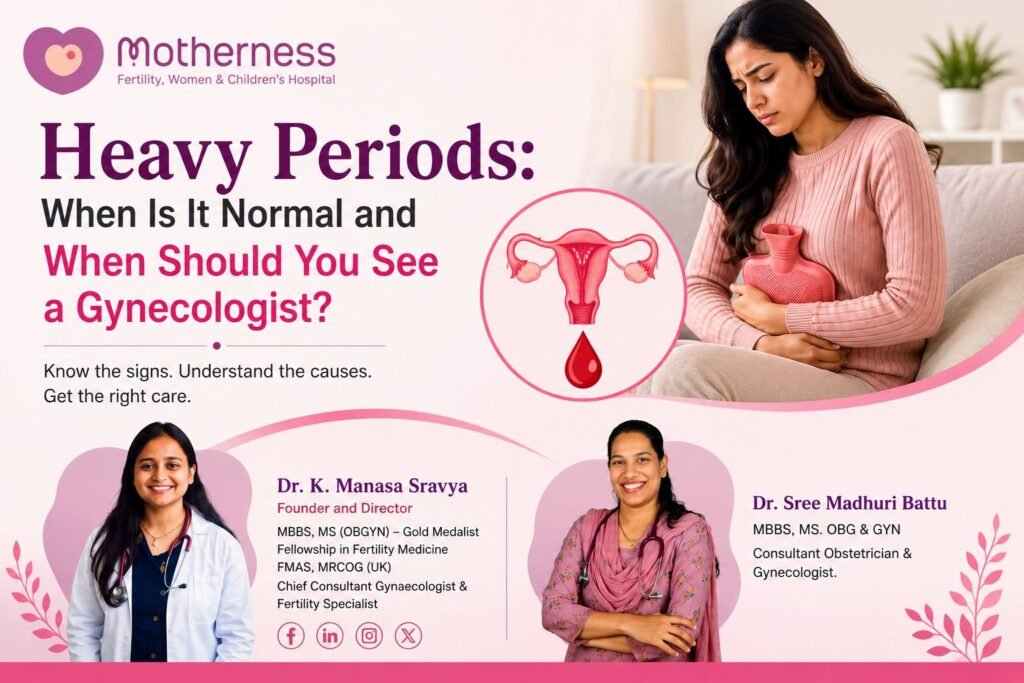
Motherness Fertility, Women & Children’s Hospital provides comprehensive women’s healthcare services in Bhimavaram, West Godavari, including gynecology, obstetrics, fertility, pediatrics, and neonatology. The hospital’s current team includes gynecology and obstetrics specialists, including Dr. K. Manasa Sravya, Chief Consultant Gynaecologist & Fertility Specialist, and Dr. Sree Madhuri Battu, Consultant Obstetrician & Gynecologist.
Women from Bhimavaram and surrounding areas such as Tadepalligudem, Palakol, Nidadavole, Kovvur and nearby parts of West Godavari can consider a gynecology consultation when persistent menstrual symptoms are affecting their health or quality of life.
Book an Appointment with Motherness Hospitals
Frequently Asked Questions
How do I know if my period is too heavy?
If you regularly need to change your pad very frequently, bleed for more than 7 days, pass large clots, experience symptoms of anemia, or find that your period significantly interferes with daily activities, you should discuss it with a gynecologist.
Is it normal to have blood clots during periods?
Small clots can occur during menstruation, especially during heavier flow. However, frequent large clots together with prolonged or very heavy bleeding should be evaluated.
Can heavy periods cause anemia?
Yes. Repeated heavy menstrual blood loss can reduce iron stores and may lead to iron-deficiency anemia. Symptoms can include tiredness, weakness, headaches, dizziness, and shortness of breath.
Can fibroids cause heavy periods?
Yes. Uterine fibroids can cause heavier or longer menstrual bleeding, depending on their size and location.
Should I see a gynecologist for heavy periods?
Yes, particularly if heavy bleeding is persistent, worsening, prolonged, painful, associated with anemia symptoms, or interfering with your everyday activities. A gynecologist can investigate the possible cause and recommend appropriate treatment.
Are heavy periods normal during perimenopause?
Menstrual patterns can become less predictable during the years leading up to menopause. However, very heavy, prolonged, or unusual bleeding should not automatically be attributed to perimenopause. It is important to discuss significant changes with a gynecologist.
Final Takeaway
A heavier period once in a while may not indicate a serious problem. But repeated heavy bleeding, prolonged periods, large clots, severe pain, fatigue, dizziness, or disruption to your daily life deserve medical attention.
The right approach is not to worry unnecessarily—but also not to ignore persistent symptoms.
If your periods have become unusually heavy or are affecting your quality of life, consult a qualified Best Gynecologist in West Godavari for an evaluation. Early assessment can help identify the cause and ensure that you receive appropriate care based on your individual health and reproductive goals.
Motherness Fertility, Women & Children’s Hospital, Bhimavaram is committed to providing compassionate and comprehensive women’s healthcare for patients across West Godavari.
Medical Disclaimer: This article is intended for general health education and does not replace an examination, diagnosis, or treatment plan from a qualified healthcare professional. If you are experiencing very heavy bleeding or feel faint, weak, or unwell, seek medical care promptly.