This year, the World Health Organization (WHO) is marking World Prematurity Day on 15 November, two days earlier than the usual 17 November. The 2026 theme is “Small babies, big potential. Invest in follow-up care to protect their future!” It is a good moment for every pregnant woman and family to know the early signs of preterm labour and what to do.
In Andhra Pradesh, the topic also came up during the recent cyclone alert. The Hindu reported on 2 November 2026 that the state health department had identified more than 3,000 pregnant women due to deliver in the first ten days of November in cyclone-prone districts, and had moved many of them to hospitals in advance. Knowing your due date, your nearest hospital and the warning signs is part of a good birth plan in any season.
Preterm labour signs can be subtle, and they are easy to mistake for normal pregnancy aches. This guide explains what preterm labour is, which symptoms need urgent attention, who is at higher risk, what doctors usually check, and the steps that help protect a baby who may arrive early.
Understanding preterm labour and premature birth
What counts as preterm labour?
A full-term pregnancy lasts around 40 weeks. According to the NHS, a baby born before 37 weeks is premature, and labour that starts before 37 weeks is called premature or preterm labour. The NHS says about 8 in every 100 babies in England are born early.
WHO estimates that around 13.4 million babies were born preterm worldwide in 2020, which is more than 1 in 10 births. WHO groups preterm babies by how early they arrive:
- Extremely preterm: born before 28 weeks
- Very preterm: born between 28 and 32 weeks
- Moderate to late preterm: born between 32 and 37 weeks
Most preterm babies are born in the moderate to late group. Babies born very early usually need more care after birth, while babies born closer to 37 weeks often need less help. In every group, the time and care given before birth matters.
Alt text: Ultrasound scan on a pregnant woman’s belly, a test used to check the cervix and baby when preterm labour is suspected | Representative stock photo by MART PRODUCTION via Pexels (Pexels licence). Models shown are not patients or staff of Motherness Hospitals.
Early signs of preterm labour to watch for
The American College of Obstetricians and Gynecologists (ACOG) and the NHS list similar warning signs. Call your doctor or maternity unit straight away if you are less than 37 weeks pregnant and have any of these:
- Regular tightenings or contractions, where your tummy goes hard and then relaxes, often every 10 minutes or more often. ACOG notes these may not hurt at all
- Period-like cramps in the lower tummy, with or without loose stools
- A gush or a slow trickle of fluid from the vagina, which may mean your waters have broken
- A change in vaginal discharge, such as more discharge than usual, or discharge that is watery, mucus-like or streaked with blood
- Pressure in the pelvis or vagina, a feeling that the baby is pushing down
- A constant, dull low backache that is new or unusual for you
Go to hospital without delay, or call 108 for an ambulance, if you are less than 37 weeks pregnant and have vaginal bleeding, a gush of fluid, strong or regular contractions, severe tummy pain, a fever, or if your baby is moving less than usual.
Is it real labour or practice contractions?
Many women feel irregular tightenings in the second half of pregnancy. These practice contractions, often called Braxton Hicks contractions, usually come and go without a pattern and do not get stronger. Preterm labour contractions tend to become regular, closer together and stronger over time.
It can be hard to tell the difference at home, even for women who have had a baby before. That is why doctors advise that you call or come in to be checked rather than wait. ACOG notes that around 3 in 10 cases of preterm labour stop on their own, but only a check-up can show what is happening. Being checked and sent home reassured is always better than arriving late.
Who is at higher risk of preterm birth?
Preterm labour can happen to anyone, and in many women no clear cause is found. ACOG lists factors that raise the chance of preterm birth:
- A previous preterm birth, which ACOG says can raise the risk about two to three times
- A short cervix, or past surgery or procedures on the cervix
- Being pregnant with twins or more
- Vaginal bleeding during pregnancy
- Some infections, including urinary and vaginal infections
- Low weight before pregnancy
- Smoking, alcohol or drug use in pregnancy
- Being younger than 17 or older than 35
- A short gap between pregnancies
Long-term health problems such as high blood pressure and diabetes, and complications like pre-eclampsia, can also lead doctors to plan an early birth for the safety of mother or baby. Tell your doctor at your first antenatal visit about any earlier preterm birth, miscarriage after 14 weeks, or surgery on your cervix.
What doctors check when you arrive
When you reach hospital with possible preterm labour, the team will usually ask about your symptoms, check your temperature, pulse and blood pressure, and monitor your baby’s heartbeat and your contractions. ACOG explains that tests may include:
- A pelvic examination to see whether the cervix has started to open or shorten
- An ultrasound scan, including a transvaginal scan to measure the length of the cervix
- A swab test such as fetal fibronectin, which can help show whether birth is likely in the coming days
- Urine and blood tests to look for infection
These results help your doctor decide whether you can go home, need to stay for observation, or need treatment to prepare for an early birth.
Care that can help a baby who may come early
Once preterm labour has started, it cannot always be stopped. Even so, the time before birth can be used well. The NHS and ACOG describe treatments that doctors may use, depending on how many weeks pregnant you are and your health:
- Steroid injections for the mother, which help the baby’s lungs mature and lower the chance of breathing problems after birth
- Magnesium sulphate, which may be given before an early birth to help protect the baby’s brain
- Medicines to slow contractions for a short time, so that steroids can work or so that you can be moved to a hospital suited to your baby’s needs
- Antibiotics if your waters have broken early, as there is a higher chance of infection
Your doctor will explain which of these, if any, are right for you. Do not take any medicine for pain or contractions at home without medical advice. ACOG also notes that strict rest lying down for days has not been shown to prevent preterm birth, and it can carry its own risks, so follow the plan your doctor gives you.
Can preterm birth be prevented?
Not every preterm birth can be prevented, but good antenatal care helps doctors spot risks early. WHO recommends that every pregnant woman has at least eight antenatal contacts, starting before 12 weeks. The NHS explains that women with a previous preterm birth or a short cervix may be advised to have a cervical length scan between 16 and 24 weeks. Depending on the findings, a doctor may suggest progesterone or a stitch in the cervix (cervical cerclage) to help the pregnancy continue.
Simple steps also help: attend every antenatal check-up, take the supplements your doctor advises, report burning while passing urine or unusual discharge early, avoid tobacco and alcohol, and keep any long-term condition under control. Our antenatal care and fetal medicine pages explain the scans and check-ups that are part of pregnancy care.
Alt text: Pregnant woman resting on her side with a hand on her belly, showing antenatal care to lower preterm birth risk | Representative stock photo by cottonbro studio via Pexels (Pexels licence). Models shown are not patients or staff of Motherness Hospitals.
Make a simple preterm labour plan
Preterm labour can start suddenly, sometimes at night or during heavy rain or a storm. A few minutes of planning helps:
- Save your doctor’s and hospital’s phone numbers and 108 in your phone, and share them with your family
- Keep your antenatal card, scan reports and ID in one folder that is easy to grab
- Know how you will reach hospital at any hour, and who will look after older children
- Keep a small bag ready from around 28 weeks, especially if you are at higher risk
- During cyclone or flood alerts, follow advice from health workers and move early if you are close to your due date
Caring for a baby born early
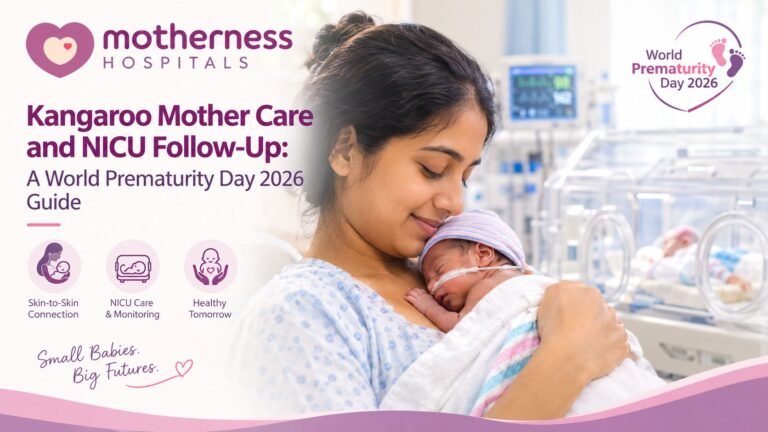
Babies born early may need help with breathing, warmth, feeding and preventing infection. WHO highlights kangaroo mother care, where the baby is held skin-to-skin on the mother’s or father’s chest, along with breastfeeding and good hygiene, as simple care that supports preterm babies. Our neonatology team can explain what care your baby may need. As this year’s World Prematurity Day theme reminds families, follow-up visits after going home matter too, for growth, feeding, eyes, hearing and development.
Pregnancy care at Motherness Hospitals, Bhimavaram
Our obstetrics team at Motherness Hospitals, JP Road, Srirampuram, Bhimavaram provides routine antenatal care and can assess women who are worried about early labour symptoms. If you have had a preterm birth before, please tell us early in your pregnancy so that we can plan your check-ups and scans with you.
This article gives general health information for pregnant women and families. It does not replace advice from your own doctor. If you think you may be in labour, contact your maternity team or go to hospital straight away.
Frequently asked questions
What are the first signs of preterm labour?
The first signs are often regular tightenings, period-like cramps, a dull low backache, pelvic pressure or a change in vaginal discharge before 37 weeks. A gush or trickle of fluid can mean your waters have broken. Contact your maternity team straight away if you notice any of these.
How do I know if contractions are real before 37 weeks?
Practice contractions are usually irregular and do not get stronger. Contractions that become regular, closer together or stronger may be preterm labour. It is hard to tell at home, so call your doctor or go to hospital to be checked.
Can preterm labour stop on its own?
Yes, sometimes. ACOG notes that around 3 in 10 cases of preterm labour stop on their own. Only a medical check can tell whether labour is progressing, so do not wait at home to see what happens.
What happens if my waters break early?
If your waters break before 37 weeks, go to hospital straight away. Doctors will check you and your baby, and may give antibiotics because there is a higher chance of infection, as well as steroid injections to help your baby’s lungs if birth is likely.
Does a previous premature baby mean my next baby will come early too?
Not always, but a previous preterm birth is one of the strongest risk factors. Tell your doctor early in your next pregnancy so that they can plan extra checks, such as a cervical length scan, and discuss whether any treatment may help.
Should I rest lying down to prevent preterm labour?
ACOG says strict rest lying down has not been shown to prevent preterm birth and can carry its own risks. Follow the specific advice your doctor gives you about activity, work and rest.
Worried about early labour symptoms?
If you are less than 37 weeks pregnant and have contractions, bleeding, fluid loss or pelvic pressure, contact our obstetrics team at Motherness Hospitals, JP Road, Srirampuram, Bhimavaram. Call +91 9550090251 or contact us online. In an emergency, call 108 or go to the nearest hospital.