Kangaroo Mother Care and NICU Follow-Up: A World Prematurity Day 2026 Guide
From 2026, World Prematurity Day is observed on 15 November. The World Health Organization’s focus this year highlights something families feel deeply after discharge: preterm babies need follow-up care, not only intensive care in the first days of life.
In India, National Newborn Care Week (15–21 November) runs in the same window, which makes this a timely moment to understand kangaroo mother care (KMC) and what “follow-up” should look like after a NICU stay.
Why follow-up care is the 2026 message
About one in ten babies worldwide is born preterm. Survival has improved where quality newborn care is available, but growth, feeding, hearing, vision and development still need structured checks after the baby goes home. WHO emphasises continuous care from the special newborn unit through the months after discharge.
This article explains KMC and follow-up in practical terms. It does not replace advice from your neonatology team.
What kangaroo mother care is
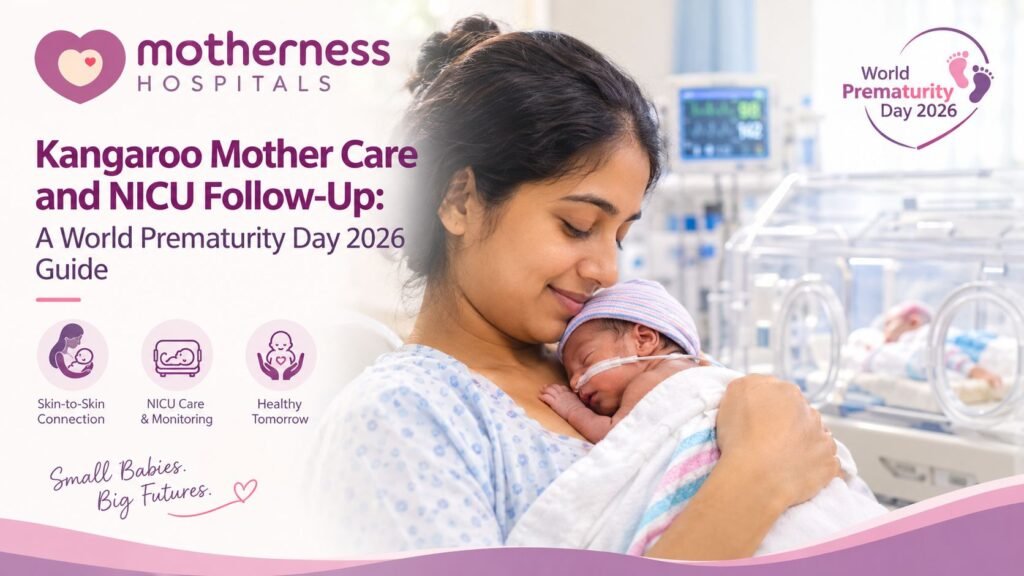
Kangaroo mother care is prolonged skin-to-skin contact between a baby and a caregiver (usually the mother, and also the father or another trained caregiver). The baby, typically wearing only a nappy and cap, is held upright on the caregiver’s bare chest and secured with a wrap or cloth for as many hours as is safely possible each day.
Why clinical teams recommend it
Evidence summarised by WHO and newborn-care programmes links KMC with:
- Better temperature stability
- Support for breathing comfort in stable babies
- Support for breastfeeding
- Bonding and parental confidence
- Reduced stress for many families when practised with supervision
KMC is a medical care method, not a casual selfie trend. Unstable babies need continuous clinical monitoring; your NICU team will say when and how KMC can begin.
Practising KMC safely in hospital and at home
In hospital
- Learn the wrap position from a trained nurse before you try alone
- Watch for colour change, breathing pauses or floppiness and call staff at once
- Keep the room warm and limit visitors who are unwell
- Combine KMC with feeding support rather than replacing feeds your baby still needs
After discharge
- Continue skin-to-skin as advised in your discharge summary
- Maintain exclusive breastfeeding or the feeding plan given to you
- Keep follow-up appointments even if the baby “looks fine”
Do not stop prescribed vitamins or medicines early
What NICU follow-up usually includes
Follow-up packages differ by hospital and by how early the baby was born. A comprehensive approach often covers:
- **Weight and growth checks** plotted on an appropriate chart
- **Feeding and lactation review**
- **Immunisation** timing adjusted for prematurity when required
- **Hearing and eye screening** as scheduled
- **Developmental surveillance** over the first years
- **Family support** — sleep, mental health and financial counselling where available
Ask for a written follow-up calendar on the day of discharge. If you move cities, request a summary that another paediatrician can read.
Warning signs after going home
Seek urgent care if your baby has:
- Difficulty breathing, chest indrawing or long pauses in breathing
- Poor feeding or repeated vomiting
- Fever or unusually cold skin
- Extreme sleepiness or inconsolable crying with lethargy
- Blue colour around lips
- Fewer wet nappies than advised
Trust your instincts — early review is better than waiting overnight if you are worried.
Supporting parents is part of care
Long NICU stays are emotionally and financially heavy. WHO’s prematurity messaging stresses family-centred care: parents close to the baby, clear communication and practical help with KMC and feeding. Asking for counselling or peer support is appropriate.
How this fits National Newborn Care Week
Between 15 and 21 November, public health messages in India focus on newborn survival: warmth, breastfeeding, hygiene and early care-seeking. KMC sits inside that warmth-and-feeding package for small and preterm babies.
Motherness Fertility, Women & Children’s Hospital provides maternity and newborn services in Bhimavaram. This article is general education for World Prematurity Day 2026 and does not replace personalised neonatal advice. For hospital contact details, see mothernesshospitals.com.
Feeding after a preterm birth
Breast milk is particularly valuable for preterm babies when clinically appropriate. Mothers may need lactation support, pumping schedules and guidance on fortification if the neonatology team recommends it. Guilt is common when direct breastfeeding is delayed — ask the lactation counsellor for a written plan instead of comparing your journey with term-baby social media posts.
If formula or fortifier is prescribed
Use only the product and dilution your team advised. Do not switch brands because of an advertisement. Clean bottles and pump parts carefully; winter visitors with colds should wash hands before touching feeding equipment.
Sleep, siblings and household infection control
Preterm babies are vulnerable to respiratory infections. During National Newborn Care Week messaging and through winter:
- Limit crowds and request that unwell relatives postpone visits
- Keep the baby’s sleep space smoke-free
- Follow safe sleep guidance from your paediatrician
- Explain KMC time gently to older siblings so they do not climb on the caregiver’s chest during skin-to-skin
Developmental follow-up without panic
Some preterm babies need physiotherapy or early-intervention reviews. Missing a milestone on a social-media checklist is not the same as a clinical concern — use your hospital’s follow-up clinic as the reference. Ask at what corrected age each skill will be assessed.
A note for parents still in the NICU on 15 November
World Prematurity Day can be emotional when your baby is still admitted. Small acts — learning one new KMC wrap step, recording a question for the evening round, accepting help with meals — are valid ways to mark the day. Purple awareness colours are optional; care and questions matter more.
Partners and other caregivers learning KMC
Fathers and grandparents can learn supervised skin-to-skin so the mother can rest or express milk. Hospitals that practise family-centred care will show positioning and safety checks. At home, only adults who have been taught the method should hold the baby in KMC position, especially if the baby still needs close observation.