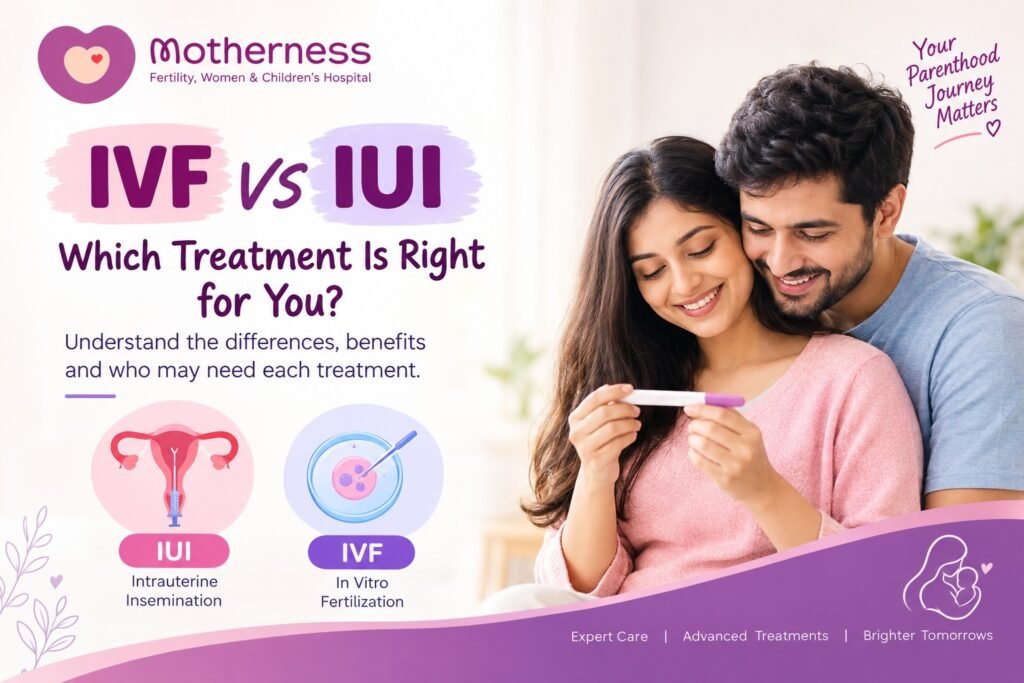
IVF vs IUI: Which Treatment Is Right for You?
Trying to have a baby can be an exciting journey, but for some couples, getting pregnant may take longer than expected. When pregnancy does not happen naturally, fertility treatments such as IUI and IVF may be considered.
Many couples hear the terms IUI and IVF but are not sure how they are different. Both treatments are designed to help with conception, but they work in different ways and are suitable for different fertility problems.
If you are searching for the Best gynecology specialist in Bhimavaram, it is important to understand your fertility condition before choosing a treatment. A fertility specialist can evaluate both partners and recommend a treatment based on factors such as age, ovulation, fallopian tube health, sperm quality, ovarian reserve and previous treatment history.
Motherness Hospitals provides fertility and gynecology care with a focus on personalized treatment and patient support. The hospital provides fertility services including IUI, IVF and other assisted reproductive treatments.
This article explains IVF and IUI in simple language so that couples can understand the differences and discuss the right option with their doctor.
What Is IUI?
IUI stands for Intrauterine Insemination. It is a fertility treatment in which specially prepared sperm is placed directly into the uterus around the time of ovulation.
Normally, sperm must travel through the vagina, cervix and uterus before reaching the fallopian tube where fertilization may occur. During IUI, prepared sperm is placed closer to the fallopian tubes.
The aim is to give healthy sperm a better opportunity to reach the egg.
IUI is generally a less invasive fertility treatment than IVF. It may be considered for selected couples depending on the cause of infertility.
A doctor may recommend IUI treatment when there are problems such as mild male-factor infertility, certain ovulation problems or unexplained infertility. However, IUI is not appropriate for every couple.
For example, if both fallopian tubes are blocked, sperm cannot reach the egg through the normal pathway, so IUI may not be useful.
This is why consulting the Best gynecology specialist in Bhimavaram is important before starting fertility treatment.
How Does IUI Work?
IUI usually involves several steps.
1. Fertility Evaluation
Before IUI, the doctor evaluates the woman’s menstrual cycle, ovulation and reproductive health. Tests may also be recommended to check whether the fallopian tubes are open.
The male partner may need a semen analysis to assess sperm count, movement and other sperm characteristics.
2. Monitoring Ovulation
The doctor may monitor follicle growth using ultrasound scans.
A follicle is a small structure in the ovary where an egg develops. When the egg becomes mature, ovulation can be timed.
Some women may also be prescribed medicines to encourage ovulation.
3. Sperm Preparation
A semen sample is collected and processed in the fertility laboratory. The aim is to prepare a sample containing healthy, moving sperm.
4. IUI Procedure
A thin catheter is gently passed through the cervix into the uterus. The prepared sperm is then placed into the uterus.
The procedure usually takes only a short time. Some women may experience mild discomfort or temporary cramping.
5. Pregnancy Test
After IUI, the doctor will tell you when to take a pregnancy test.
The exact treatment plan and number of IUI cycles depend on the couple’s fertility condition and response to treatment.
What Is IVF?
IVF stands for In Vitro Fertilization.
Unlike IUI, where fertilization is expected to happen inside the body, IVF involves fertilizing the egg and sperm in a fertility laboratory.
The word “in vitro” means “in glass,” referring to the laboratory environment where fertilization takes place.
During IVF, eggs are collected from the woman’s ovaries. Sperm is collected from the male partner or obtained through an appropriate donor program when medically indicated. The egg and sperm are combined in the laboratory.
If fertilization occurs and an embryo develops, an embryo may later be transferred into the uterus.
IVF treatment is a more advanced assisted reproductive treatment and can be useful for several causes of infertility.
If you are considering IVF, meeting an experienced Best gynecology specialist in Bhimavaram can help you understand whether IVF is appropriate for your particular situation.
How Does IVF Work?
IVF generally involves several stages.
1. Initial Fertility Assessment
Before IVF, the doctor reviews the medical history of both partners.
Depending on the situation, tests may include hormone testing, ultrasound examination, ovarian reserve assessment and semen analysis.
The doctor may also evaluate the uterus and fallopian tubes when necessary.
2. Ovarian Stimulation
Medicines may be used to encourage the ovaries to develop multiple follicles during one treatment cycle.
The purpose is to obtain more than one mature egg because not every egg will fertilize or develop into a usable embryo.
Regular monitoring is important during this stage.
3. Egg Retrieval
When the eggs are mature, they are collected from the ovaries using a medical procedure.
The procedure is generally performed with appropriate pain relief or anesthesia according to the fertility centre’s protocol.
4. Fertilization in the Laboratory
The collected eggs are combined with sperm in the laboratory.
In selected cases, a procedure called ICSI may be recommended. ICSI involves injecting a single sperm directly into an egg.
The choice between conventional IVF fertilization and ICSI depends on the medical situation, especially sperm-related factors and previous fertilization results.
5. Embryo Development
After fertilization, embryos are monitored in the laboratory.
Not every fertilized egg develops into an embryo suitable for transfer. The fertility team monitors embryo development and discusses the appropriate transfer plan with the couple.
6. Embryo Transfer
An embryo may be transferred into the uterus using a thin catheter.
If implantation occurs and pregnancy develops, further monitoring is performed by the medical team.
IVF vs IUI: What Is the Main Difference?
The biggest difference is where fertilization happens.
With IUI, sperm is placed inside the uterus and fertilization is expected to happen naturally inside the woman’s reproductive system.
With IVF, eggs are collected and fertilization takes place in a laboratory. An embryo is then transferred into the uterus.
This means IVF gives the fertility team more control over the fertilization and embryo-development stages.
However, this does not mean IVF is automatically the right treatment for everyone.
Fertility treatment should be selected according to the cause of infertility rather than simply choosing the more advanced procedure.
This is why consulting a qualified fertility specialist in Bhimavaram can be an important step before beginning treatment.
When May IUI Be Considered?
IUI may be considered in selected situations such as:
Mild Male-Factor Infertility
If sperm count or movement is mildly reduced, prepared sperm may be placed directly into the uterus to help more healthy sperm reach the reproductive tract.
Ovulation Problems
Some women do not ovulate regularly. Medicines may sometimes be used to stimulate ovulation, followed by timed IUI.
Unexplained Infertility
Sometimes fertility tests do not identify a clear reason why pregnancy has not occurred. Depending on the couple’s age and fertility history, IUI may be considered as part of the treatment plan.
Difficulty With Intercourse
In certain medical situations where vaginal intercourse is difficult or not possible, IUI may be an option.
However, IUI is not suitable for every fertility problem. For example, blocked fallopian tubes can prevent sperm from reaching the egg.
A consultation with the Best gynecology specialist in Bhimavaram can help determine whether IUI is medically suitable.
When May IVF Be Recommended?
IVF may be considered when there are fertility factors that make simpler treatments less suitable or when previous fertility treatments have not worked.
Blocked or Severely Damaged Fallopian Tubes
The fallopian tubes provide the normal pathway for sperm and egg to meet.
When the tubes are blocked, IVF can bypass the tubes because fertilization takes place in the laboratory.
Severe Male-Factor Infertility
Some couples may require IVF with ICSI when sperm-related problems are significant.
Reduced Ovarian Reserve
A woman’s egg quantity and quality generally decline with age. If ovarian reserve is reduced, the fertility specialist may discuss IVF or other options depending on the individual situation.
Endometriosis
Endometriosis can affect fertility in different ways. Some women with endometriosis may require assisted reproductive treatment.
Previous Failed Fertility Treatment
If other treatments have not resulted in pregnancy, IVF may be discussed depending on the reason for infertility and the couple’s circumstances.
Unexplained Infertility
For unexplained infertility, treatment may progress step by step. Depending on age, duration of infertility and previous treatment, a doctor may recommend IUI initially or move toward IVF.
Is IUI Better Than IVF?
There is no single answer to this question.
IUI and IVF are different treatments designed for different situations.
IUI is generally simpler and less invasive. IVF involves more steps, including ovarian stimulation, egg retrieval, laboratory fertilization and embryo transfer.
For some couples, IUI may be a reasonable first treatment. For others, IVF may be recommended earlier because of the underlying fertility problem.
The goal should not be to choose the treatment that sounds more advanced. The goal is to choose a treatment that matches the medical needs of the couple.
This is why a detailed fertility evaluation is important before making a decision.
Is IVF Painful?
Many couples are worried about pain during IVF.
The experience can vary from person to person.
Hormonal injections may cause temporary discomfort. Ultrasound monitoring may also cause some mild discomfort.
Egg retrieval is performed using appropriate anesthesia or sedation according to the clinic’s medical protocol. Some women may experience mild cramping, bloating or tiredness after the procedure.
Your fertility specialist should explain each step, possible side effects and warning signs before treatment begins.
IVF is considered a well-established fertility treatment, but like every medical procedure, it has possible risks. Ovarian stimulation can rarely lead to ovarian hyperstimulation syndrome, and fertility treatment can also increase the chance of multiple pregnancy depending on the treatment approach.
For this reason, careful monitoring is an important part of fertility care.
Is IUI Safer Than IVF?
IUI is less invasive than IVF because it does not require egg retrieval or laboratory fertilization.
However, the safety of either treatment depends on how it is performed and whether fertility medicines are used.
When medicines are used to stimulate ovulation, there can be a risk of developing multiple follicles, which can increase the possibility of a multiple pregnancy.
Your doctor will monitor the treatment and may change or stop a cycle if the response to medication is not appropriate.
The safest approach is to follow a treatment plan designed specifically for your medical condition.
What Tests Are Needed Before Choosing IUI or IVF?
A fertility evaluation usually considers both partners.
Depending on the situation, your doctor may recommend:
Hormone Tests
Blood tests can help assess reproductive hormones and other factors affecting fertility.
Ultrasound
Ultrasound can help evaluate the uterus, ovaries and developing follicles.
Ovarian Reserve Assessment
Tests may be used to estimate ovarian reserve. These results should always be interpreted together with age, medical history and other fertility findings.
Semen Analysis
Male fertility is an important part of the evaluation. A semen analysis can assess sperm count, movement and other characteristics.
Fallopian Tube Assessment
Doctors may recommend a test to determine whether the fallopian tubes are open.
Medical History
Previous pregnancies, miscarriages, surgeries, menstrual problems, infections, medications and other medical conditions may affect treatment decisions.
A fertility assessment should therefore involve both partners rather than focusing only on the woman.
How Can Age Affect Fertility Treatment?
Age is an important factor in fertility because egg quantity and quality change over time.
However, age alone does not determine whether IUI or IVF will work.
Other factors include:
- Ovarian reserve
- Egg quality
- Sperm quality
- Uterine health
- Fallopian tube condition
- Duration of infertility
- Previous pregnancy history
- Medical conditions
- Response to fertility medicines
- Lifestyle factors
This is why two women of the same age may receive completely different fertility treatment plans.
A qualified Best gynecology specialist in Bhimavaram can review these factors and explain the available options clearly.
How Do You Know Which Treatment Is Right for You?
Choosing between IUI and IVF should be a medical decision made after proper evaluation.
During your consultation, ask your doctor:
What Is Causing Our Infertility?
Understanding the possible cause helps determine which treatment may be useful.
Are My Fallopian Tubes Open?
If the tubes are blocked, IUI may not be suitable.
How Is My Ovarian Reserve?
Ovarian reserve can provide useful information when planning fertility treatment.
What Is My Partner’s Sperm Quality?
Male-factor infertility is common and should always be evaluated.
Should We Try IUI First?
In selected cases, the doctor may recommend IUI before moving to IVF.
Do We Need IVF Directly?
Some couples may benefit from moving directly to IVF because of their fertility diagnosis, age or previous treatment history.
A good doctor should explain the reasoning behind the recommendation rather than simply asking you to choose a treatment.
Why Choosing the Right Fertility Specialist Matters
Fertility treatment is not just about medicines and procedures. It also involves emotional support, communication and careful monitoring.
When looking for the Best gynecology specialist in Bhimavaram, consider factors such as:
- Qualification and fertility training
- Experience in managing different fertility conditions
- Availability of fertility investigations
- IVF and IUI treatment facilities
- Laboratory support
- Clear explanation of treatment options
- Proper monitoring during treatment
- Patient privacy and comfort
- Follow-up care
- Transparent discussion of risks, benefits and costs
You can learn more about the hospital and its medical team on the About Motherness Hospitals page.
Why Consider Motherness Hospitals for Fertility Care in Bhimavaram?
Motherness Hospitals provides fertility, gynecology, obstetrics and maternity care for patients who need evaluation and treatment for reproductive health concerns.
The hospital provides fertility services including IVF and fertility treatment, IUI, ICSI and other assisted reproductive services.
The approach to fertility treatment should always be personalized because every couple has a different medical history.
If you are looking for the Best gynecology specialist in Bhimavaram, you can discuss your fertility concerns with the specialists at Motherness Hospitals and understand which diagnostic tests and treatment options may be appropriate for you.
You can also contact Motherness Hospitals to learn more about appointments and available fertility services.
Frequently Asked Questions
Is IUI cheaper than IVF?
IUI is generally a simpler treatment and usually involves fewer procedures than IVF. However, the total cost depends on medicines, tests, monitoring and the number of treatment cycles required. Your fertility centre can provide a treatment-specific estimate.
How many IUI cycles should I try?
There is no fixed number that is suitable for every couple. The doctor may consider your age, fertility diagnosis, ovarian reserve, sperm quality and previous treatment response before deciding how many cycles are appropriate.
Can IUI be converted to IVF?
IUI and IVF are separate treatment approaches. If IUI does not result in pregnancy or if testing shows that IVF is more appropriate, your fertility specialist may recommend moving to IVF.
Does IVF guarantee pregnancy?
No fertility treatment can guarantee pregnancy or a live birth. IVF can provide a treatment option for many fertility conditions, but outcomes vary between individuals and depend on several factors.
Can men also have fertility problems?
Yes. Fertility problems can affect either partner or both partners. Male fertility should therefore be evaluated through an appropriate medical history and semen analysis when indicated.
Is fertility treatment only for women?
No. Fertility care involves both partners. The cause of difficulty conceiving may be related to female factors, male factors, both, or sometimes remain unexplained.
Final Thoughts
IUI and IVF are both important fertility treatments, but they are not the same.
IUI places prepared sperm directly into the uterus around ovulation, while IVF involves collecting eggs, fertilizing them in a laboratory and transferring an embryo into the uterus.
The right treatment depends on the cause of infertility, age, ovarian reserve, sperm quality, fallopian tube health, previous treatment and overall reproductive health.
Instead of choosing a treatment based only on cost or what someone else experienced, speak with a qualified fertility specialist and understand your own medical condition.
If you are searching for the Best gynecology specialist in Bhimavaram, Motherness Hospitals can help you understand fertility evaluation and available treatment options. The medical team can assess your individual situation and guide you through the next appropriate step.
Do not lose hope if pregnancy is taking longer than expected. With proper evaluation, timely medical guidance and an individualized treatment plan, many couples can explore appropriate pathways toward parenthood.