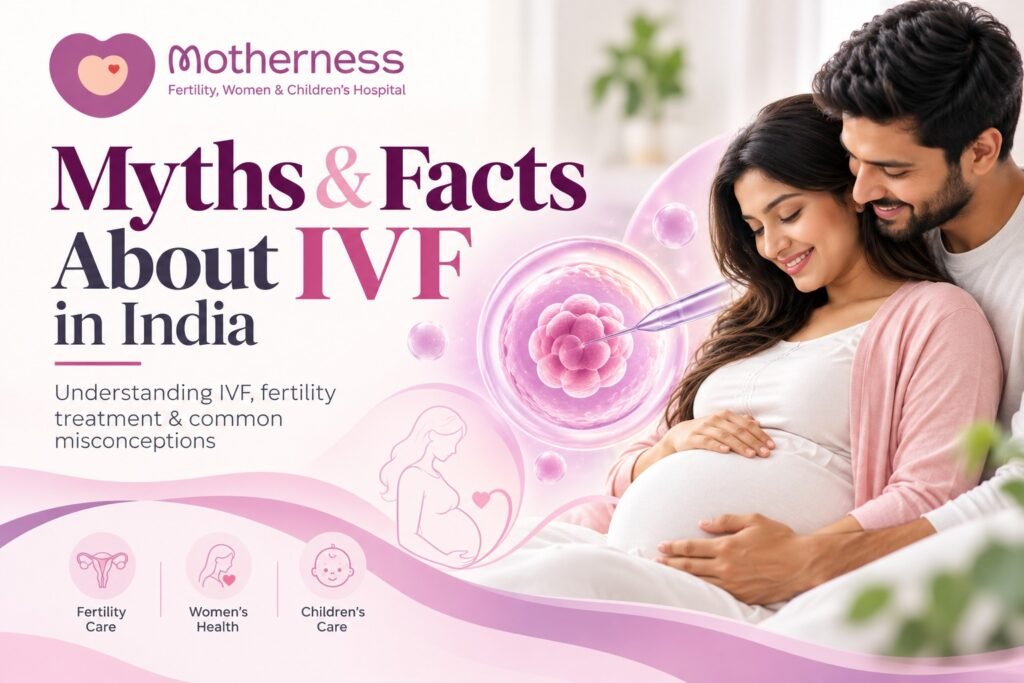
Myths and Facts About IVF in India
In vitro fertilization, commonly known as IVF, has helped many couples explore parenthood when pregnancy does not happen naturally. However, despite IVF becoming more widely discussed in India, many myths and misunderstandings still surround the treatment.
Some people believe that IVF always guarantees pregnancy. Others worry that IVF babies are unhealthy, that IVF is only for older women, or that infertility is mainly a woman’s problem. These ideas can create unnecessary fear and confusion.
The truth is that fertility treatment is a medical field based on careful evaluation, laboratory science and individualized treatment planning.
If you are searching for the Best gynecology specialist in Bhimavaram, understanding the facts about IVF can help you have a more informed conversation with a fertility specialist.
Motherness Hospitals provides gynecology and fertility care in Bhimavaram, including fertility evaluation and assisted reproductive treatments. Its fertility services include IVF, ICSI, IUI and fertility-preservation options.
This article explains some of the most common IVF myths and facts in India in simple language.
What Is IVF?
IVF stands for In Vitro Fertilization.
In simple terms, IVF is a fertility treatment in which an egg and sperm are brought together in a laboratory. If fertilization occurs and an embryo develops, the embryo may later be transferred into the uterus.
IVF may be considered for different fertility problems, including some conditions affecting the fallopian tubes, ovaries, sperm or other parts of the reproductive system.
Infertility can affect either partner, both partners, or sometimes the cause may not be identified. The World Health Organization also recognizes infertility as a condition that can result from male factors, female factors, combined factors or unexplained causes.
This is why fertility evaluation should not focus only on the woman.
A consultation with the Best gynecology specialist in Bhimavaram can help couples understand the possible cause of difficulty conceiving and the treatment options available.
Why Are There So Many Myths About IVF?
IVF involves several medical steps, so it can seem complicated to people who have never experienced fertility treatment.
Information from friends, relatives, social media and the internet may not always be medically accurate. One person’s IVF experience may also be very different from another person’s experience.
For example, one couple may need IVF because of blocked fallopian tubes, while another may require treatment because of severe male-factor infertility.
Therefore, IVF should never be understood through one person’s experience alone.
A fertility specialist considers the couple’s age, medical history, fertility diagnosis, ovarian reserve, sperm health and other factors before recommending treatment.
Myth 1: IVF Guarantees Pregnancy
Fact: IVF can improve the opportunity for pregnancy, but it cannot guarantee it.
This is one of the most common misunderstandings about IVF.
IVF is an advanced fertility treatment, but pregnancy depends on several biological factors.
These can include:
- Age of the woman
- Egg quality
- Ovarian reserve
- Sperm quality
- Embryo development
- Uterine health
- Underlying medical conditions
- Previous fertility history
- Response to treatment
Even when an embryo is transferred successfully, implantation and pregnancy cannot be guaranteed.
A responsible fertility clinic should explain realistic expectations rather than promise a guaranteed pregnancy.
If you are considering treatment, speak with a qualified Best gynecology specialist in Bhimavaram about your individual situation instead of relying on generalized success claims.
Myth 2: IVF Is Only for Women
Fact: Male factors can also contribute to infertility.
Infertility is not exclusively a woman’s problem.
Sperm production, sperm movement, sperm shape, hormonal conditions and certain reproductive problems can affect male fertility.
The ICMR’s current male-infertility treatment workflow emphasizes evaluating both partners and identifying potentially correctable male factors.
Male-factor infertility can sometimes be treated with medicines, surgery or assisted reproductive techniques depending on the underlying condition.
In some cases of significant male-factor infertility, IVF combined with ICSI may be considered.
ICSI stands for Intracytoplasmic Sperm Injection. During this procedure, a single sperm is injected directly into an egg in the laboratory.
Therefore, fertility assessment should generally consider both partners.
Myth 3: IVF Is Only for Older Women
Fact: Women of different ages may need IVF for different reasons.
Age is an important factor in female fertility, but IVF is not exclusively an age-related treatment.
A younger woman may need IVF because of:
- Blocked fallopian tubes
- Endometriosis
- Certain ovarian conditions
- Severe male-factor infertility
- Genetic or medical considerations
- Previous unsuccessful fertility treatment
- Unexplained infertility
At the same time, fertility generally changes with increasing age, particularly because egg quantity and quality can decline.
ICMR guidance recommends earlier infertility evaluation in certain situations, including when the woman is over 35, and immediate evaluation for women over 40.
This does not mean that every woman over a certain age needs IVF. The appropriate treatment depends on individual medical findings.
Myth 4: IVF Means the Woman Cannot Have a Natural Pregnancy
Fact: Needing IVF does not mean natural pregnancy is impossible.
Infertility has many possible causes.
Some couples may undergo fertility treatment because pregnancy has not occurred after an appropriate period of trying, while others may have a specific medical condition that makes natural conception difficult.
In some situations, the underlying condition may be treated and natural conception may still be possible.
In other cases, assisted reproductive technology may provide an appropriate pathway to pregnancy.
Therefore, needing fertility treatment should not automatically be interpreted as meaning that natural pregnancy can never happen.
A fertility specialist can explain whether natural conception, ovulation treatment, IUI or IVF may be reasonable options.
Myth 5: IVF Is Extremely Painful
Fact: IVF involves medical procedures, but the experience varies from person to person.
IVF involves several stages, including hormonal medicines, ultrasound monitoring, egg retrieval and embryo transfer.
Some women may experience mild discomfort from injections or scans. Egg retrieval is generally performed with appropriate anesthesia or sedation according to the clinic’s protocol.
Temporary bloating, cramping or tiredness can occur after egg retrieval.
The experience is different for every woman.
At Motherness Hospitals, its published fertility information describes fertility procedures as involving generally manageable discomfort, with egg retrieval performed under anesthesia.
Before starting treatment, your doctor should explain each stage, possible side effects and warning signs.
Myth 6: IVF Babies Are Not Healthy
Fact: Most babies born through IVF are healthy.
This is another common fear among couples considering IVF.
IVF has been used for decades, and millions of children have been born following assisted reproductive treatment worldwide.
The American Society for Reproductive Medicine describes IVF as a well-established medical procedure and notes that most babies born through IVF are healthy. It also explains that IVF has certain risks that should be discussed with patients.
It is important to understand that fertility problems themselves, maternal age and underlying health conditions can also influence pregnancy outcomes.
This is why IVF pregnancies may require appropriate medical monitoring.
If you have concerns about the health of a future baby, discuss your specific medical history with your fertility specialist.
Myth 7: IVF Always Results in Twins or Triplets
Fact: Multiple pregnancy is possible, but it is not an unavoidable part of IVF.
Many people associate IVF with twins because more than one embryo may historically have been transferred in some treatment situations.
However, the number of embryos transferred is an important clinical decision.
Doctors consider factors such as:
- Age
- Embryo quality
- Previous treatment history
- Medical condition
- Pregnancy risks
- Clinical guidelines
Multiple pregnancies can carry additional risks for both the mother and babies.
Therefore, fertility specialists aim to balance the chance of pregnancy with maternal and fetal safety.
Your doctor can explain the embryo-transfer plan that is appropriate for your individual circumstances.
Myth 8: IVF Causes Early Menopause
Fact: IVF treatment does not mean that a woman will automatically experience early menopause.
This myth often develops because IVF medicines stimulate the ovaries to develop multiple follicles during a treatment cycle.
Some people mistakenly think that using several eggs during IVF means the ovaries are permanently “using up” their eggs faster.
The ovaries naturally contain a pool of eggs, and many eggs are lost naturally during the reproductive years.
IVF stimulation is designed to recruit follicles that are available during that cycle. It does not mean that a woman suddenly loses all her remaining eggs.
However, ovarian reserve and fertility naturally change with age.
If you are concerned about ovarian reserve, ask your gynecologist or fertility specialist about appropriate tests and what the results mean for you.
Myth 9: IVF Is Only Needed When a Woman Has a Fertility Problem
Fact: IVF can be recommended because of male, female or combined fertility factors.
Fertility is a couple-level issue.
For example, a woman may have healthy ovaries and open fallopian tubes, but her partner may have severe sperm abnormalities.
In another couple, the male partner may have normal semen parameters while the woman has blocked fallopian tubes.
Sometimes both partners have contributing factors.
According to WHO, infertility may arise from male factors, female factors, a combination of factors or unexplained causes.
This is why both partners should be appropriately evaluated when infertility is suspected.
Myth 10: You Should Try IVF Without Any Fertility Tests
Fact: Proper evaluation should come before selecting treatment.
IVF is not a treatment that every couple should automatically start.
A fertility specialist may first review:
Medical History
Your doctor may ask about menstrual cycles, previous pregnancies, surgeries, infections, medical conditions and previous fertility treatment.
Ultrasound Examination
Ultrasound can provide information about the uterus, ovaries and developing follicles.
Ovarian Reserve
Tests may help assess ovarian reserve and support treatment planning.
Semen Analysis
A semen analysis can provide information about sperm count, movement and other sperm characteristics.
Fallopian Tube Assessment
Depending on the situation, testing may be recommended to determine whether the fallopian tubes are open.
The ICMR female infertility workflow emphasizes history-taking and evaluation of both partners as part of infertility assessment.
Therefore, the right treatment should follow diagnosis rather than the other way around.
Myth 11: IVF Is Always the First Fertility Treatment
Fact: IVF is one option among several fertility treatments.
Not every couple who has difficulty conceiving needs IVF immediately.
Depending on the diagnosis, treatment may include:
- Fertility awareness and timed intercourse
- Ovulation induction
- Treatment of an underlying medical condition
- IUI
- IVF
- ICSI
- Surgery when appropriate
- Fertility preservation in selected cases
The WHO’s 2025 infertility guideline supports progressing from appropriate simpler fertility-care approaches to more advanced treatments such as IUI or IVF according to the individual’s clinical situation.
This is why a detailed consultation is important.
Myth 12: IVF Success Is the Same for Every Woman
Fact: IVF outcomes vary from person to person.
It is tempting to ask, “What is the IVF success rate?”
However, there is no single number that applies equally to every patient.
Outcomes can vary according to:
- Age
- Egg quality
- Ovarian reserve
- Sperm quality
- Embryo quality
- Uterine health
- Medical conditions
- Previous fertility treatment
- Laboratory factors
Therefore, couples should be cautious about advertisements that promise a particular outcome for everyone.
A fertility specialist should explain what the available evidence means in the context of the individual patient.
If you are looking for the Best gynecology specialist in Bhimavaram, ask questions about your own medical situation rather than relying only on general success-rate claims.
Myth 13: IVF Is Not Regulated in India
Fact: India has a legal framework for assisted reproductive technology.
India enacted the Assisted Reproductive Technology (Regulation) Act, 2021, which provides a framework for the regulation and supervision of assisted reproductive technology clinics and banks and aims to support safe and ethical ART practice. The Act came into force on January 25, 2022, according to the Government of India’s published legal record.
The legislation covers areas related to ART clinics, ART banks, patients, gametes and embryos.
Couples should still choose fertility care providers carefully and ask about the qualifications of the treating team, laboratory facilities, treatment plan, costs and follow-up care.
Myth 14: Lifestyle Does Not Matter Once You Start IVF
Fact: Healthy habits remain important during fertility treatment.
IVF is a medical treatment, but general health can still matter.
Lifestyle factors such as smoking, excessive alcohol consumption and obesity have been associated with fertility problems. WHO also highlights healthy lifestyle measures as part of fertility care.
Patients undergoing IVF should follow their doctor’s instructions regarding:
- Medicines
- Food and nutrition
- Physical activity
- Smoking and alcohol
- Sleep
- Existing medical conditions
- Supplements
However, lifestyle changes should not be presented as a guaranteed way to make IVF successful.
They are part of overall health and fertility care.
Myth 15: Stress Alone Causes Infertility
Fact: Infertility has many possible medical causes.
Stress is often blamed when a couple cannot conceive.
While emotional stress can affect overall well-being and may influence health behaviors, infertility should not simply be explained by saying, “You are stressed.”
Medical factors may include:
- Ovulation problems
- Fallopian tube problems
- Endometriosis
- Uterine conditions
- Sperm abnormalities
- Hormonal conditions
- Age-related fertility changes
- Unexplained factors
WHO recognizes infertility as a reproductive health condition with multiple possible causes.
Couples experiencing infertility deserve proper medical evaluation rather than blame.
When Should You Consult a Fertility Specialist?
According to ICMR guidance, infertility evaluation is generally considered after 12 months of regular unprotected intercourse in women under 35. Earlier evaluation may be appropriate when the woman is over 35 or when there are known or suspected fertility problems.
You may consider consulting a fertility specialist earlier if there is:
- Irregular or absent periods
- Known PCOS or endometriosis
- Previous pelvic or ovarian surgery
- Suspected blocked fallopian tubes
- Previous chemotherapy or radiation
- Known sperm problems
- Repeated pregnancy loss
- Previous unsuccessful fertility treatment
If you are searching for the Best gynecology specialist in Bhimavaram, choosing a specialist who provides proper evaluation before recommending treatment can help you understand your options more clearly.
How to Choose a Fertility Specialist in Bhimavaram
Choosing a fertility specialist is an important personal decision.
When comparing fertility-care options, consider:
Medical Qualification and Experience
Ask about the doctor’s qualifications and experience in gynecology and fertility care.
Diagnostic Facilities
A fertility centre should be able to arrange appropriate investigations and monitoring.
Fertility Treatment Options
Depending on the diagnosis, couples may need options such as IUI, IVF or ICSI.
Laboratory Support
The IVF laboratory plays an important role in egg, sperm and embryo handling.
Clear Communication
Your doctor should explain the treatment plan, possible risks, expected steps and costs in understandable language.
Individualized Treatment
A treatment plan should be based on your medical findings rather than being identical for every patient.
For couples searching for the Best gynecology specialist in Bhimavaram, Motherness Hospitals provides gynecology and fertility services in Bhimavaram. Its published fertility information describes services including IVF, ICSI, IUI, fertility evaluation and fertility preservation.
You can also read the hospital’s guide to choosing a gynecology hospital in Bhimavaram for additional information about women’s healthcare services.
Why Medical Guidance Matters During IVF
IVF can be an emotional and physically demanding process.
Patients may have many questions about injections, scans, egg retrieval, embryo development and pregnancy testing.
It is normal to have concerns.
A fertility specialist should explain what is happening at each stage and help patients understand why a particular treatment is being recommended.
For couples considering fertility treatment, Motherness Hospitals provides fertility and women’s healthcare services in Bhimavaram.
The hospital’s published contact information lists its Bhimavaram location at JP Road, near the Old BJP Office, Srirampuram, Bhimavaram-2, along with appointment contact details.
Frequently Asked Questions About IVF
Is IVF safe?
IVF is a well-established fertility treatment, but like any medical procedure, it has possible risks. These can include complications related to ovarian stimulation and pregnancy. Your doctor should explain the potential risks and benefits before treatment.
Does IVF guarantee a baby?
No. IVF can help couples achieve pregnancy, but it cannot guarantee pregnancy or a live birth.
Can IVF be used for male infertility?
Yes. IVF, sometimes combined with ICSI, may be considered for certain male-factor fertility problems.
Does IVF always result in twins?
No. Multiple pregnancy is possible, but it is not unavoidable. The embryo-transfer plan should be discussed with your fertility specialist.
Is IVF only for women above 35?
No. IVF may be recommended for people of different ages depending on the cause of infertility.
Can younger women need IVF?
Yes. Conditions such as blocked tubes, severe male-factor infertility, certain reproductive conditions or previous unsuccessful treatments can lead to IVF being considered.
How long should a couple wait before seeing a fertility doctor?
ICMR guidance generally uses 12 months of regular unprotected intercourse as a point for infertility evaluation in women under 35, while earlier evaluation may be appropriate after 35 or when risk factors are present.
Final Thoughts: Understanding IVF Beyond the Myths
IVF is neither a miracle guarantee nor something couples should automatically fear.
It is a medical treatment that can help address certain causes of infertility. Its suitability depends on the individual couple’s medical condition.
The most important step is to understand the difference between IVF myths and facts.
IVF does not guarantee pregnancy. It is not only for older women, and infertility is not only a woman’s problem. IVF babies are not automatically unhealthy, and IVF does not necessarily mean twins or early menopause.
Most importantly, couples should not choose IVF based only on stories from friends, social media posts or advertisements.
A proper fertility evaluation can help identify the possible cause of infertility and determine whether lifestyle changes, medication, IUI, IVF, ICSI or another treatment may be appropriate.
If you are looking for the Best gynecology specialist in Bhimavaram, Motherness Hospitals offers gynecology and fertility services to help couples understand their reproductive health and available treatment options.
You can contact Motherness Hospitals to discuss an appointment and learn more about available fertility services.
Remember: every fertility journey is different. A treatment that is suitable for one couple may not be suitable for another. The best approach is to have an open discussion with a qualified fertility specialist and make decisions based on your own medical evaluation.