Bringing a newborn baby home is one of the happiest moments for any family. Along with the joy, however, comes a lot of responsibility and concern. For new parents, especially first-time mothers and fathers, it can sometimes be difficult to understand which symptoms are normal and which signs require immediate medical attention.
Newborn babies are delicate, and even small changes in their feeding, breathing, sleeping, or body temperature can sometimes indicate a serious health issue. Early identification and timely medical care can make a significant difference in protecting a baby’s health and development.
At Motherness Fertility, Women & Children’s Hospital, our pediatric and neonatal specialists regularly help parents recognize early warning signs and provide immediate care for newborn emergencies. Families searching for the Best gynecology specialist in Bhimavaram often also look for trusted newborn and pediatric care under one roof, especially during the critical first few months after birth.
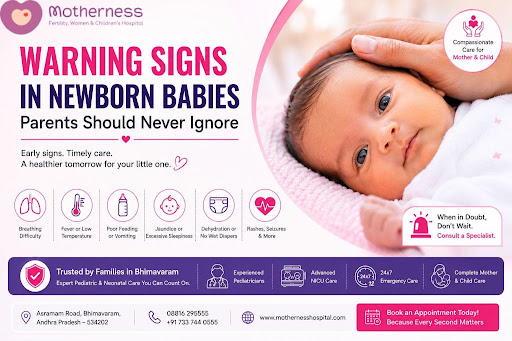
This guide will help parents understand the important warning signs in newborn babies that should never be ignored.
Why Monitoring a Newborn’s Health Is So Important
The first 28 days after birth are considered the neonatal period. During this stage, a baby’s immune system is still developing, making newborns more vulnerable to infections, breathing problems, feeding difficulties, and temperature-related complications.
Many serious conditions in newborns start with mild symptoms. What may appear to be a small issue can sometimes become severe within a few hours. This is why parents should trust their instincts and seek medical care whenever something feels unusual.
1. Difficulty Breathing
Breathing problems in newborns should always be treated as an emergency.
Warning Signs Include:
- Rapid breathing
- Grunting sounds while breathing
- Chest sinking inward during breaths
- Bluish lips or skin
- Long pauses between breaths
- Noisy breathing or wheezing
Newborn babies normally breathe slightly faster than adults, but persistent breathing difficulty is not normal. It may indicate:
- Lung infections
- Pneumonia
- Respiratory distress
- Congenital heart conditions
- Low oxygen levels
Parents should seek immediate pediatric evaluation if a baby struggles to breathe or shows signs of oxygen deprivation.
2. Fever or Low Body Temperature
A newborn’s body temperature must remain stable. Even a mild fever can sometimes indicate a serious infection.
When to Worry:
- Fever above 100.4°F (38°C)
- Body temperature below 97°F (36.1°C)
- Baby feels unusually cold or hot
- Excessive sweating
In newborns, infections can spread quickly through the bloodstream. Fever may be linked to:
- Viral infections
- Bacterial infections
- Sepsis
- Urinary infections
Low body temperature can also signal serious illness, especially in premature babies.
Never give medications to newborns without medical advice. Immediate consultation with pediatric specialists is recommended.
3. Poor Feeding or Refusing Milk
Healthy newborns generally feed every 2–3 hours. If a baby suddenly refuses milk or feeds poorly, parents should pay attention.
Concerning Signs:
- Weak sucking
- Sleeping through feeds repeatedly
- Vomiting after every feed
- Difficulty swallowing
- Baby appears too tired to feed
Poor feeding can lead to dehydration and may indicate:
- Infection
- Jaundice
- Digestive problems
- Neurological conditions
Newborn babies can become dehydrated very quickly, so reduced feeding should never be ignored.
4. Persistent Vomiting
Small spit-ups are common in babies. However, forceful or repeated vomiting is not normal.
Warning Signs:
- Green-colored vomiting
- Projectile vomiting
- Blood in vomit
- Swollen abdomen
- Baby cries excessively after feeds
These symptoms may suggest:
- Intestinal blockage
- Severe infection
- Digestive abnormalities
- Food intolerance
If vomiting becomes frequent or severe, immediate medical evaluation is necessary.
5. Yellowing of Skin or Eyes (Jaundice)
Mild jaundice is common in many newborns. However, severe jaundice can affect the brain if left untreated.
Watch for:
- Yellow eyes
- Yellow skin spreading to legs or palms
- Poor feeding
- Excessive sleepiness
- High-pitched crying
Newborn jaundice occurs due to increased bilirubin levels in the blood. While mild cases may resolve naturally, severe jaundice may require:
- Phototherapy
- NICU monitoring
- Blood investigations
Parents should never delay treatment if jaundice worsens.
6. Excessive Sleepiness or Reduced Activity
Newborn babies sleep a lot, but they should still wake for feeding and respond to touch or sounds.
Warning Signs:
- Baby difficult to wake up
- No response to feeding attempts
- Weak crying
- Reduced movement
- Unusual limpness
These signs can indicate:
- Infection
- Low blood sugar
- Neurological disorders
- Oxygen deficiency
Any sudden change in alertness requires immediate pediatric attention.
7. Continuous Crying or Irritability
Crying is a baby’s way of communicating. However, constant crying for long periods may signal pain or discomfort.
Parents Should Watch For:
- High-pitched crying
- Crying that cannot be soothed
- Crying while touching a specific body part
- Baby pulling legs toward stomach
Possible causes include:
- Colic
- Ear infections
- Fever
- Digestive discomfort
- Serious infections
If crying becomes unusual or excessive, medical evaluation is important.
8. Reduced Urination or No Wet Diapers
Newborn babies should produce regular wet diapers daily.
Signs of Dehydration:
- Fewer than 6 wet diapers after the first week
- Dry lips
- Sunken eyes
- Sunken soft spot on head
- Dark yellow urine
Dehydration in newborns can become dangerous quickly. It may occur due to:
- Poor feeding
- Vomiting
- Fever
- Diarrhea
Immediate treatment helps prevent complications.
9. Skin Rashes or Unusual Color Changes
Not all newborn rashes are dangerous, but certain skin changes should never be ignored.
Seek Medical Care If You Notice:
- Purple or blue skin patches
- Large blisters
- Pus-filled rashes
- Pale skin
- Red rashes with fever
These symptoms may indicate:
- Infection
- Allergic reactions
- Blood circulation issues
- Serious skin conditions
Parents should avoid self-medicating or applying creams without pediatric advice.
10. Seizures or Abnormal Movements
Seizures in newborns may appear differently compared to adults.
Warning Signs:
- Repeated jerking movements
- Eye rolling
- Lip smacking
- Sudden stiffening
- Repetitive twitching
Seizures may result from:
- Brain infections
- Birth complications
- Fever
- Metabolic disorders
This is a medical emergency and requires immediate hospital care.
11. Diarrhea or Blood in Stool
Newborn digestion is sensitive, but persistent diarrhea is not normal.
Parents Should Be Concerned If:
- Baby passes watery stools frequently
- Blood appears in stool
- Stool has mucus
- Baby becomes weak or dehydrated
Possible causes include:
- Infections
- Milk intolerance
- Digestive disorders
Prompt medical evaluation is necessary to prevent dehydration and complications.
12. Umbilical Cord Infection
The umbilical cord area should gradually dry and heal. Signs of infection should never be ignored.
Symptoms Include:
- Redness around cord
- Swelling
- Pus discharge
- Foul smell
- Fever
Untreated infections can spread rapidly in newborns.
Parents should keep the area clean and dry while seeking medical attention if infection signs appear.
Importance of Regular Pediatric Check-Ups
Even when babies appear healthy, routine newborn check-ups are essential for monitoring:
- Growth
- Weight gain
- Feeding patterns
- Vaccinations
- Development milestones
Regular consultations help detect hidden health issues early and provide reassurance for parents.
At Motherness Fertility, Women & Children’s Hospital, experienced pediatricians, neonatologists, and women’s healthcare experts work together to provide complete newborn and maternal care for families in Bhimavaram.
Families searching online for the Best gynecology specialist in Bhimavaram often prefer hospitals that also offer advanced neonatal care, NICU support, pediatric emergency services, and comprehensive mother-and-child healthcare under one roof.
Tips for Parents to Keep Newborns Healthy
1. Maintain Proper Hygiene
Always wash hands before handling the baby.
2. Follow Vaccination Schedules
Vaccines protect babies from dangerous infections.
3. Ensure Proper Feeding
Exclusive breastfeeding is recommended for the first six months whenever possible.
4. Avoid Crowded Places
Newborn immunity is weak during the early months.
5. Monitor Baby’s Temperature
Avoid overheating or excessive cold exposure.
6. Attend Regular Pediatric Visits
Routine check-ups help track healthy development.
When Should Parents Visit the Hospital Immediately?
Parents should seek emergency care if their newborn:
- Has breathing difficulty
- Develops fever
- Refuses feeds
- Becomes unusually sleepy
- Has seizures
- Turns blue
- Vomits repeatedly
- Shows signs of dehydration
It is always safer to consult a doctor early rather than wait for symptoms to worsen.
Trusted Newborn & Women’s Healthcare in Bhimavaram
Choosing the right hospital for both mother and baby is extremely important. Parents need compassionate doctors, experienced pediatric specialists, advanced neonatal facilities, and immediate emergency care when required.
Motherness Fertility, Women & Children’s Hospital provides comprehensive services including:
- Pediatric care
- Neonatal intensive care (NICU)
- High-risk pregnancy care
- Gynecology services
- Child emergency care
- Vaccination support
- Mother and baby wellness programs
For families searching for the Best gynecology specialist in Bhimavaram, finding a hospital that also prioritizes newborn safety and pediatric expertise offers complete peace of mind.
Final Thoughts
Every parent wants their newborn baby to grow healthy and safe. While many newborn issues are minor and temporary, certain warning signs should never be ignored. Quick medical attention can prevent complications and ensure early treatment when necessary.
Parents should trust their instincts. If something feels unusual with the baby’s feeding, breathing, sleeping, or activity levels, seeking immediate medical advice is always the right decision.
Early care saves lives—and timely pediatric support can make all the difference during a newborn’s most delicate stage of life.